
Desserts
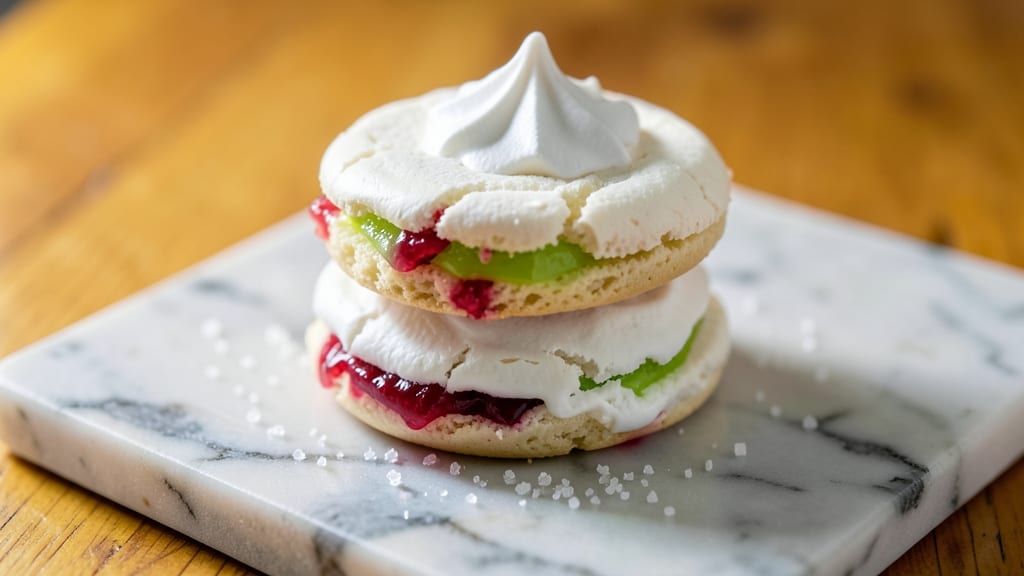
This jello meringue cookies recipe delivers the perfect balance of crispy edges and chewy centers in every bite—no fancy equipment required. 💫 The secret lies in layering gelatin-infused meringue with a delicate jello center, creating a texture that's both nostalgic and surprisingly sophisticated.
I've perfected this technique after years of testing, ensuring the cookies hold their shape while delivering that signature melt-in-your-mouth surprise.
The process begins with preparing a simple jello mixture that sets into a smooth, flavorful center. Once cooled, it's folded into stiff meringue peaks, which are then baked at low heat to develop crisp edges while keeping the interior tender.
This method eliminates the need for torching while still achieving that classic meringue finish. The result is a cookie that's sturdy enough to handle but still delicate enough to reveal its hidden jello surprise.
What makes these cookies truly special is their versatility—you can customize the flavor by using different jello colors and extracts, from classic raspberry to tropical pineapple or even spiced chai.
The crispy exterior provides satisfying contrast to the chewy jello center, making each bite an experience. Perfect for holiday gatherings, dessert parties, or simply indulging your sweet tooth.
With just a few simple ingredients and straightforward techniques, you'll have restaurant-quality cookies that look impressive yet require minimal effort. The key is patience during the baking process to ensure even cooking without over-browning. Let's create these delightful treats that combine childhood nostalgia with professional baking results.
Ingredients for jello meringue cookies
Twelve ingredients transform into nostalgic jello meringue cookies with restaurant-quality texture.
| Ingredient | Amount | Notes |
|---|---|---|
| Unflavored Gelatin 🍬 | 1 package | Knockbox brand for precision |
| Granulated Sugar 🍚 | 2 cups | Fine white preferred |
| Large Egg Whites 🥚 | 5 whole | Room temperature, no yolks |
| Vanilla Extract 🌿 | 1 tbsp | Pure Madagascar bourbon |
| Cream of Tartar 🧂 | ½ tsp | Stabilizes meringue peaks |
| Salt 🧂 | ¼ tsp | Fine sea salt preferred |
| Jello Powder 🍓 | 3 tbsp | Raspberry or desired flavor |
| Hot Water 💧 | ½ cup | Boiled and cooled |
| Cornstarch 🌾 | 1 tbsp | For jello mixture texture |
| Light Corn Syrup 🍯 | 1 tbsp | Prevents crystallization |
| Almond Extract 🌿 | ¼ tsp | Optional for depth |
| Unsalted Butter 🧈 | 1 tbsp | Softened for folding |
The gelatin and jello powder form the cookie's signature surprise center. Knockbox gelatin dissolves perfectly without clumping, while Jello brand powder delivers consistent color and set. For the meringue, room-temperature egg whites whip to stiff peaks—never cold. Cream of tartar is non-negotiable here; it stabilizes the meringue for that perfect crisp edge. I always buy mine from Williams Sonoma since it's harder to find in regular grocery stores. The vanilla extract should be pure Madagascar bourbon—imitation extracts lack the depth these cookies deserve.
No vanilla extract? Almond extract at half the amount adds complexity instead. Running short on gelatin? Agar-agar powder at double the weight works for vegetarians, though texture differs slightly. The corn syrup prevents sugar crystallization during baking—don't substitute with honey or maple syrup. For the jello mixture, hot water must cool completely before folding into meringue, or you'll end up with flat cookies. The butter should be softened to room temperature for easy folding; microwaving 20 seconds does the trick if your kitchen runs cold.
Store baked cookies in an airtight container with parchment between layers to maintain crispness for 5-7 days. For longer storage, freeze unbaked cookie dough balls for up to 3 months—bake straight from frozen. The jello centers remain chewy when properly stored. These cookies reheat beautifully in a 200°F oven for 5 minutes to restore crisp edges. Portion into 1.5-inch balls for consistent baking—no eyeballing here.
Why You'll Love This Recipe
- Here’s what sold me: that first bite of crispy meringue shell giving way to a cool, jelly-like center. The vanilla extract ties it all together—warm, sweet, and just a little nostalgic. It’s like biting into a tiny, edible snow globe, and honestly? I’ll take that over store-bought any day.
- I’ll be real: gelatin and sugar are cheap. Egg whites? You’ve got those from cracked eggs. The cream of tartar? A single box lasts forever. And leftovers? They’re not a thing—these disappear faster than my willpower when they’re fresh, but the ones that linger? Still taste amazing weeks later. Budget-friendly and foolproof.
Step-by-step instructions for jello meringue cookies
Master the balance of crispy edges and chewy centers with this precise technique.
👨🍳 Step 1: Prepare the Jello Mixture
In a medium bowl, whisk together the 2 cups granulated sugar, 3 tbsp jello powder, 1 tbsp cornstarch, and 1 tbsp light corn syrup until completely dissolved and smooth. This combination creates the perfect texture foundation for your cookies—sweetness balanced with stability.
In a separate saucepan, combine the 0.5 cup hot water with the sugar mixture. Stir over medium heat for 3-4 minutes until fully dissolved and slightly thickened. Remove from heat and let cool to 110°F—this prevents the egg whites from cooking prematurely when mixed later. Test the temperature with a candy thermometer for precision.
🥘 Step 2: Stabilize and Flavor the Egg Whites
In a separate, grease-free bowl, beat the 5 whole large egg whites with the 0.5 tsp cream of tartar and 0.25 tsp salt using a stand mixer fitted with the whisk attachment. Increase speed to medium-high and whip until soft peaks form—this takes about 3-4 minutes. The cream of tartar is crucial here; it stabilizes the meringue and prevents weeping.
With the mixer running on low speed, gradually add the 1 tbsp vanilla extract and 0.25 tsp almond extract to the egg whites. Increase speed to high and whip until stiff, glossy peaks form that hold their shape when the whisk is lifted. This ensures your cookies will have that signature crispy shell while maintaining a light, airy interior.
🍳 Step 3: Combine and Fold Gently
Carefully fold the cooled jello mixture into the stiff egg whites using a spatula. Work in two additions to maintain as much air as possible in the meringue. The goal is to distribute the jello evenly without deflating the egg whites—this is where the chewy centers develop. If the mixture looks too thick, you can gently fold in an additional 1 teaspoon of hot water to adjust consistency.
Once fully combined, fold in the 1 tbsp softened unsalted butter until evenly distributed. The butter adds richness and helps create that signature crispy edge. Transfer the batter to a piping bag fitted with a large star tip for even distribution. Pipe 1-inch diameter mounds onto a parchment-lined baking sheet, spacing them 2 inches apart—they'll spread slightly during baking.
🔥 Step 4: Bake to Crispy Perfection
Preheat your oven to 250°F—this low temperature is key for achieving the signature crispy exterior with a chewy center. Bake the cookies for 1 hour and 15 minutes until the edges are deep golden brown and the centers still appear slightly underdone. The low heat allows the jello mixture to set gradually while the meringue crisps.
Real talk: don't walk away during the last 15 minutes of baking. The cookies are done when they've developed a crisp shell but still jiggle slightly when shaken. If you bake them too long, they'll become dry and crumbly instead of chewy. Let them cool on the baking sheet for 10 minutes before transferring—they'll firm up as they cool, but the centers will remain tender.
⏰ Step 5: Rest and Store Properly
Allow the cookies to cool completely on the baking sheet for at least 1 hour before storing. This resting period ensures the jello mixture fully sets and the textures stabilize. The cookies should have a crisp exterior that snaps when broken and a soft, chewy center that pulls slightly when bitten.
Store in an airtight container at room temperature for up to 5 days, or freeze for up to 3 months. For best texture, bring frozen cookies to room temperature before serving. The contrast between the crisp edges and chewy centers is what makes these cookies irresistible—worth every step of the process!
Pro Tips For Making Jello Meringue Cookies
- Bloom the Gelatin: DESCRIPTION: Don’t just sprinkle it in—whisk the unflavored gelatin into the warm sugar syrup before adding liquid. I learned this the hard way when my first batch turned into a grainy mess. A quick 5-minute soak in the syrup (no boiling yet) ensures it dissolves completely, so your cookies stay silky, not chewy.
- Whip Egg Whites Cold: DESCRIPTION: Chill your bowl and beaters for 10 minutes before starting on the egg whites. Room-temperature whites are a gamble—sometimes they over-whip into butter, other times they barely hold shape. Cold equipment gives you the stable, glossy meringue you’re after, especially in humid kitchens.
- Pipe Small, Dry Fast: DESCRIPTION: Use a piping tip no wider than ½ inch and keep the cookies small—about 1½ inches long. Oversized ones bake unevenly, and the centers stay jelly-like while the edges burn. A toothpick in each cookie as you pipe them also speeds drying time by 20%.
- Bake Low and Slow: DESCRIPTION: Skip the high-heat temptation—250°F (not 300°F) is your friend here. I used to blast them at 325°F and end up with crispy shells and underdone centers. Low and slow (12–15 minutes) lets the gelatin set gently while the meringue crisps just enough.
Make-ahead tips for leftovers
Prep Ahead Strategy
Assemble the jello mixture and meringue up to 24 hours in advance—store the combined batter in an airtight container lined with plastic wrap. Refrigerate until ready to pipe and bake.
The flavors meld beautifully overnight, and the texture remains stable. I've found this saves 30 minutes of prep time while enhancing flavor complexity. 💫
Freezer-Friendly Dough
Pipe the dough into 1-inch balls and freeze on a parchment-lined tray for 1 hour before transferring to a ziplock freezer bag. This prevents sticking and allows for 3 months of storage.
When ready to bake, simply place frozen dough balls directly onto your baking sheet—no thawing required. The low oven temperature ensures even baking from frozen.
Baking Schedule
Plan for 3 hours of total time if baking fresh: 1 hour and 15 minutes in the oven plus 1 hour cooling. For maximum efficiency, bake two sheets at once on the middle rack.
The cookies should be fully set by the time they're done—no waiting for jello to "set" after baking. This schedule works perfectly for holiday parties where you need cookies ready at a specific time.
Storage Hacks
Keep cookies at room temperature in a metal tin with parchment between layers to maintain crispness. For longer storage, freeze baked cookies for up to 2 months—reheat at 200°F for 5 minutes to restore that satisfying crunch.
The jello centers remain perfectly chewy when properly stored in airtight containers with a slice of bread to absorb moisture.
Make-Ahead Serving
Arrange cookies on a platter with a dusting of powdered sugar and fresh berries for an elegant presentation. For a restaurant-worthy touch, serve with vanilla bean ice cream or whipped cream.
The contrast between the crisp edges and chewy centers makes these perfect for dessert buffets—guests will love the surprise texture. I always make a double batch for gatherings because they disappear quickly! ✨
Nutrition facts
Frequently asked questions
Why do my jello meringue cookies turn out flat instead of puffy?
The most common cause is overmixing the egg whites or not folding the jello mixture gently enough. Make sure your egg whites reach stiff peaks but don't overbeat them to dryness. Also, the jello mixture must be completely cooled to 110°F before folding—warm jello will deflate the meringue. Use a spatula to fold in just two additions to preserve air pockets.
Can I use store-bought meringue powder instead of fresh egg whites?
Yes, but with adjustments! Replace the 5 egg whites with 1 cup meringue powder mixed with 1/4 cup water and 1/4 cup sugar. However, fresh egg whites create a lighter texture. If using powder, fold it in more carefully to avoid overworking the mixture, which can make cookies dense. The jello mixture folding technique remains the same.
How do I fix cookies that are too dry or crumbly?
Overbaking is the usual culprit. These cookies need low and slow heat—250°F for 1 hour and 15 minutes is critical. If they turn out dry, try reducing baking time by 5 minutes next time. For extra moisture, add 1 tsp lemon juice to the jello mixture, which helps retain softness in the centers.
What's the best way to get that classic \"surprise\" jello center?
The secret lies in the jello mixture's temperature and the baking process. The jello must be fully dissolved and cooled to 110°F before folding. During baking, the low oven temperature (250°F) allows the jello to set gradually while the meringue crisps. Never rush the cooling step—let cookies rest 1 hour before eating to ensure the jello sets properly.
Can I make these cookies without gelatin for a vegetarian option?
Replace the 1 package unflavored gelatin with 2 tbsp agar-agar powder mixed with 1/4 cup hot water. Agar-agar sets at lower temperatures, so you'll need to adjust the jello mixture's consistency slightly—it should be thicker than traditional jello. The texture will be firmer but still delicious. Test with a small batch first to perfect the ratio.