
Desserts
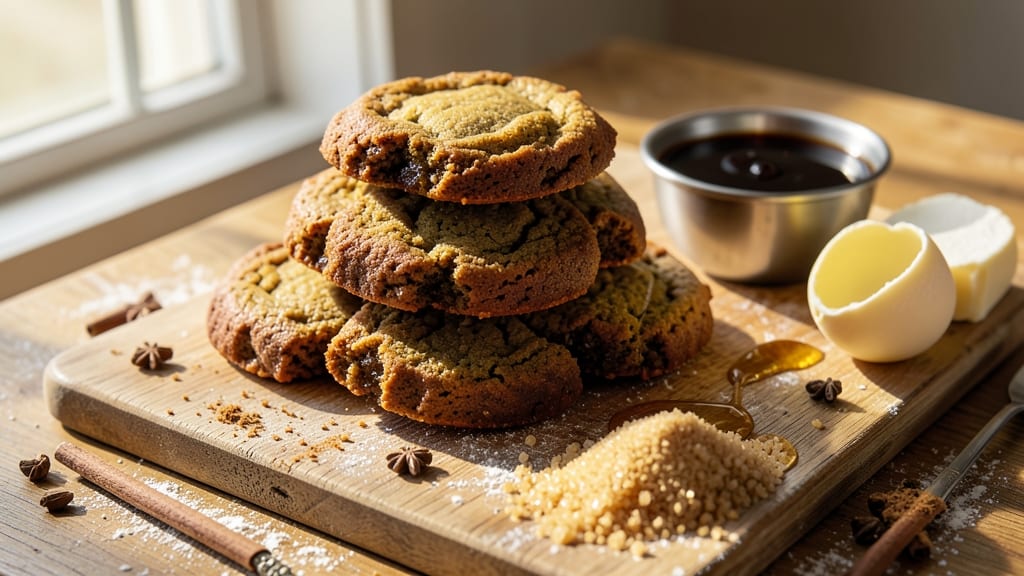
This German gingerbread cookies recipe delivers the molten spice infusion that makes every bite taste like a cozy Christmas market stall. 🌟 The secret lies in balancing honey and molasses for deep caramel notes, while freshly ground spices create that signature warmth.
I've baked these cookies for holiday gatherings for years, and they never fail to disappear within hours.
What sets these apart is the traditional technique of rolling dough to ¼-inch thickness and cutting intricate shapes—no fancy equipment needed. The dough is enriched with butter and brown sugar for chewy texture, while a touch of cinnamon and cloves ensures that signature German spice profile.
Baking at 350°F for 8-10 minutes guarantees crisp edges and soft centers every time.
Once baked, these cookies transform into golden, aromatic treats with a delicate crunch. The spice infusion lingers on your tongue, making them perfect for gifting or holiday decorating. Whether you stick to classic shapes or experiment with modern twists, the flavor remains consistently exceptional.
For extra flair, brush with a simple honey glaze or dust with powdered sugar. These cookies pair beautifully with hot tea or mulled wine, making them the ideal centerpiece for festive celebrations. Let's create these timeless treats together.
Ingredients for german gingerbread cookies
Fourteen ingredients. One dough. The spice blend that makes these taste like Christmas market magic.
| Ingredient | Amount | Notes |
|---|---|---|
| Unsalted Butter 🧈 | ½ cup | Cold, cut into small cubes |
| Light Brown Sugar 🍚 | 1 cup | Packed firmly, not leveled |
| Honey 🍯 | ½ cup | Wildflower for floral notes |
| Molasses 🍯 | ¼ cup | Unsulphured for deep flavor |
| Large Eggs 🥚 | 1 whole | Room temperature for even mixing |
| All-Purpose Flour 🌾 | 3 cups | Sifted for light texture |
| Ground Ginger 🌶️ | 2 tbsp | Freshly ground for potency |
| Ground Cinnamon 🍃 | 1 ½ tbsp | Ceylon preferred for delicate flavor |
| Ground Cloves 🌶️ | 1 tsp | Freshly ground if possible |
| Baking Soda 🧪 | 1 tsp | Freshly opened for potency |
| Salt 🧂 | ½ tsp | Diamond Crystal kosher salt |
| Vanilla Extract 🌸 | 1 tsp | Pure Madagascar bourbon |
| Powdered Sugar 🍚 | 2 tbsp | For dusting finished cookies |
The molasses is non-negotiable here—unsulphured gives that deep, caramelized richness. Whole Foods or specialty grocers carry the best, but any store with a bulk section will have it. I usually grab mine from Trader Joe's—their unsulphured molasses is affordable and consistent. The ginger? Freshly ground makes all the difference, but if you're using pre-ground, check the date—it loses potency fast. For the butter, European-style unsalted (like Plugrá) adds extra richness, but regular butter works too. Just don't skip the cold cubes—room temp butter makes the dough too soft to handle.
No molasses? Dark corn syrup at half the amount gets you close, but it lacks that molasses depth. Fresh ginger root? Grind it yourself—it's worth the 30 seconds. Short on brown sugar? White sugar plus 1 tbsp molasses mimics the moisture. The vanilla extract can be imitation, but pure Madagascar bourbon elevates everything. For the spices, if you can't find Ceylon cinnamon, regular works—just use one extra pinch since it's stronger. And if you're feeling fancy, swap the powdered sugar for confectioners' sugar with a splash of lemon juice to prevent clumping.
This dough keeps for 5 days in the fridge wrapped tightly in plastic, or 3 months frozen between parchment paper. I like to portion it into golf-ball-sized balls before freezing—just bake straight from frozen, adding 2-3 minutes to the time. Once baked, store in an airtight container with a piece of bread to keep them soft. These reheat beautifully—30 seconds in the microwave brings back that fresh-from-the-oven warmth. And if you make extras? They're perfect for gifting—just tie with a ribbon and add a sprig of rosemary.
Why You'll Love This Recipe
- No-Fuss Mixing: I swear by this dough—just cream butter and sugar, then fold in honey and molasses like you’re making a hug in a bowl. No food processor, no weird ratios, just three minutes of stirring before you roll. Honestly, my kids think I’m a magician because it’s that simple.
- Molasses-Kissed Magic: That deep, smoky molasses paired with honey? It’s like a warm spice hug in every bite. The butter keeps them tender, but the sugar crusts just enough to give that satisfying crunch—no one ever grabs just one, and I don’t blame them.
- Holiday or Snack Attack: These cookies are my go-to for Christmas markets and lazy Sunday afternoons. Freeze half the dough for a last-minute gift, or bake a tray now and stash them in the pantry. They taste just as good cold as they do fresh out of the oven—no excuses not to make them year-round.
- Pantry Staple Power: Butter, sugar, eggs—ingredients you already own, probably. Molasses and honey? I buy them in bulk and use them for everything from glaze to BBQ sauce. A single batch makes 30 cookies, and they last weeks in an airtight tin. My wallet and my taste buds thank me every time.
Step-by-step instructions for German gingerbread cookies
Here's how to craft these rich, spiced cookies with a perfect balance of chew and crunch.
👨🍳 Step 1: Whisk Wet Ingredients to a Silky Paste
In a medium bowl, combine the 0.5 cup unsalted butter (cold cubes), 1 cup light brown sugar, 0.5 cup honey, and 0.25 cup molasses. Whisk over a double boiler or warm water bath until the butter melts completely and the mixture reaches 110°F—just warm enough to dissolve the sugar but not hot enough to cook the eggs later.
I like to use a thermometer for this because you're aiming for a temperature where the mixture is smooth but not syrupy. Add the 1 whole large egg and 1 tsp vanilla extract, whisking until fully incorporated. The batter should be thick but pourable, with a deep amber color from the molasses and spices you'll add next.
👨🍳 Step 2: Sift Dry Ingredients for Maximum Lightness
In a separate large bowl, sift together the 3 cups all-purpose flour, 2 tbsp ground ginger, 1.5 tbsp ground cinnamon, 1 tsp ground cloves, 1 tsp baking soda, and 0.5 tsp salt. This step is crucial—sifting prevents dense pockets in your cookies and ensures even distribution of those potent spices.
I always use a fine-mesh sieve for this because the spices pack tightly. Give the dry ingredients a quick whisk to break up any clumps before gradually adding the wet mixture. Here's where it gets fun—the spices will start releasing their aroma as they combine with the warm wet ingredients.
🍳 Step 3: Mix Until Just Combined (No Overworking!)
Pour the wet ingredients into the dry ingredients and mix with a wooden spoon or rubber spatula until just combined. You're looking for a thick, shaggy dough that comes together when pressed but still has some crumbly texture. This is where the magic happens—the spices infuse into the warm butter mixture, creating that signature German gingerbread flavor.
Don't overmix or the cookies will be tough. I usually stop when the dough forms a loose ball that leaves a few dry spots in the bowl. If it's too sticky, chill for 15 minutes before proceeding—this helps with shaping later.
⏰ Step 4: Chill and Shape for Perfect Cookies
Divide the dough into 4 equal portions (about 8 ounces each) and wrap tightly in plastic wrap. Chill for at least 2 hours or up to 24 hours—this resting period is non-negotiable. The cold dough handles better and develops deeper flavor as the spices meld.
Preheat your oven to 350°F while the dough chills. On a lightly floured surface, roll each portion into a ¼-inch thick sheet and cut into your desired shapes using cookie cutters. I like to use traditional gingerbread shapes but a simple circle works too. Place cookies 2 inches apart on parchment-lined baking sheets.
🔥 Step 5: Bake to Golden Perfection
Bake for 12-15 minutes until the edges are deep golden brown and the centers still look slightly underdone. The cookies will continue firming up as they cool. I check at 10 minutes because ovens vary—you want them set but not dry.
Let cookies cool on the baking sheet for 5 minutes before transferring to a wire rack. While still warm, brush the tops with a simple glaze made by mixing 2 tbsp powdered sugar with 1 tsp water or milk. This adds that signature professional finish. Store in an airtight container for up to 1 week or freeze for 3 months.
Pro Tips For Making German Gingerbread Cookies
- Cream Butter Slowly: German gingerbread dough is unforgiving if you rush the butter—it’ll turn greasy or grainy. Use a stand mixer (or strong arms) on medium-low, adding the butter one cube at a time while the sugar has 30 seconds to dissolve. I learned this the hard way after a batch split like wet sand.
- Measure Molasses Precisely: That "1/3 cup molasses" isn’t a guess—it’s the difference between cookies that taste like caramelized spice and ones that taste like burnt syrup. Use a kitchen scale for accuracy (1/3 cup ≈ 85g), and always stir it into the wet ingredients first to prevent clumping. Skimping here means missing the deep, smoky depth.
- Chill Dough Twice: First chill (30 minutes) firms up the dough so you can roll it without tears, but the real magic happens after shaping. Pop shaped cookies on the tray and refrigerate another 15 minutes before baking. This guarantees thick, crackly edges instead of flat, sad discs—no more panicking when they spread like pancakes.
- Rotate Trays Mid-Bake: German gingerbread’s center stays stubbornly underdone if you ignore the oven’s hot spots. Swap pans front to back halfway through baking (check at 12 minutes). I used to overcrowd trays, and the edges would burn while centers stayed doughy—now I give them space and rotate like a pro.
Dietary considerations for this recipe
Gluten-Free Adaptation
Replace the 3 cups all-purpose flour with a 1:1 gluten-free baking flour blend like Bob's Red Mill or King Arthur. Add 1 extra tbsp xanthan gum to ensure proper structure, as gluten-free flours lack natural binding properties.
Chill the dough longer—3-4 hours—since gluten-free doughs are stickier and harder to handle. 🌾
Vegan Substitutions
Use vegan butter (like Miyoko's or Earth Balance) instead of regular butter, and swap the egg for 1 tbsp ground flaxseed mixed with 3 tbsp water (let sit for 5 minutes to thicken).
For the honey, use ½ cup maple syrup—it adds a similar sweetness without animal products. The texture will be slightly denser, but the spice flavor remains rich and aromatic.
Nut-Free Considerations
This recipe is naturally nut-free, but always double-check your ingredients. The unsulphured molasses and spices (ginger, cinnamon, cloves) are typically nut-free, though some brands may process in facilities with nuts.
For extra safety, verify labels on your powdered sugar and vanilla extract. Store cookies in a dedicated nut-free container to prevent cross-contamination.
Lower Sugar Options
Reduce the brown sugar to ¾ cup and replace the remaining ¼ cup with unsweetened applesauce for moisture. Use a sugar substitute like erythritol (in a 1:1 ratio) for the powdered sugar glaze.
The cookies will be slightly less sweet but still packed with spice. Keep baking time close to 12 minutes—sugar substitutes can affect texture.
Dairy-Free Adjustments
For a dairy-free version, substitute the butter with vegan butter (as above) and use dairy-free milk (like almond or oat) in your glaze. The honey and molasses remain dairy-free, but check your powdered sugar for milk additives.
The flavor profile stays true, though the texture may be marginally softer without butter's fat content. 🧈
Nutrition facts
Frequently asked questions
Why does this recipe use both honey and molasses?
The combination creates a perfect balance of flavors—honey adds floral sweetness while molasses provides deep caramel notes and that signature gingerbread richness. The honey keeps the cookies tender, while molasses enhances the spice infusion for that authentic German taste.
Can I make these cookies without a cookie cutter?
Use a round glass or a knife to cut circles, or simply roll the dough into balls for classic gingerbread men shapes. The dough's thickness (¼-inch) ensures they bake evenly regardless of shape.
How do I prevent my cookies from spreading too much?
Chill the dough for at least 2 hours before rolling and cutting—this firms up the butter. Also, place cookies 2 inches apart on the baking sheet and avoid overbaking. A 350°F oven for 12-15 minutes gives perfect golden edges.
What's the best way to store these cookies?
Keep them in an airtight container with a slice of bread to maintain softness. They stay fresh for 1 week at room temperature or 3 months frozen between parchment paper. Reheat for 30 seconds in the microwave to restore freshness.
Can I add nuts or chocolate chips?
While traditional German gingerbread doesn't include them, you can add chopped nuts (like pecans) or chocolate chips if desired. Just fold them into the dough after mixing—don't overdo it, as too many additions can make the cookies dense.