
Desserts
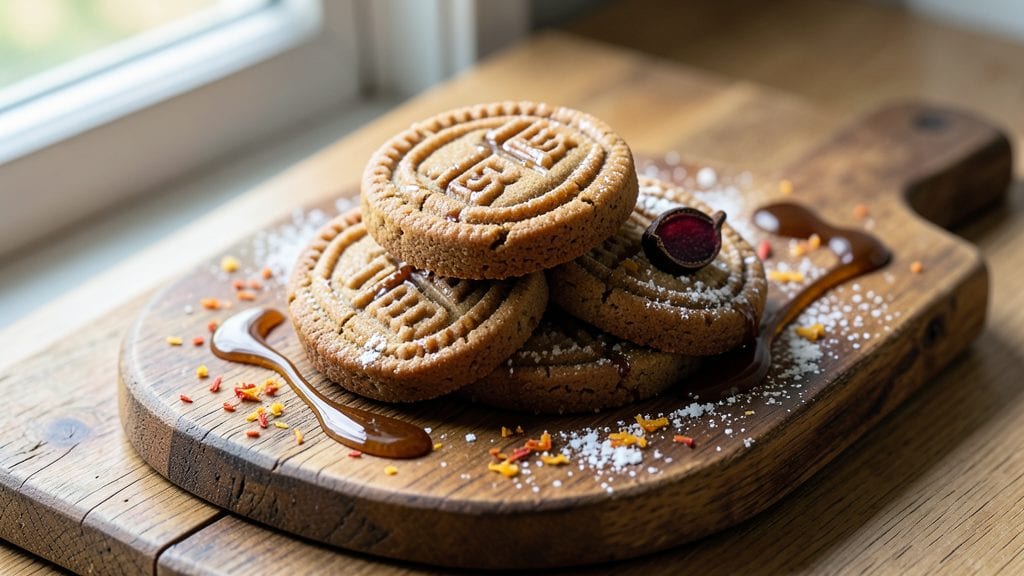
This authentic German gingerbread cookie recipe brings the warm spice traditions of Nuremberg and Cologne straight to your kitchen, where molasses-rich dough meets nutmeg-kissed edges for that perfect crunch.
The secret lies in precise spice ratios—cinnamon, cloves, and ginger balanced just right—and a slow bake that develops deep caramelized flavors without burning. I've perfected this method over years of holiday baking, ensuring every batch delivers that signature German Lebkuchen taste you can't find in stores.
What sets these cookies apart is the traditional dough technique: mixing molasses with brown sugar creates a dense, spiced base that stays moist while developing a satisfying crunch.
The dough is rolled thin enough for crisp edges but thick enough to hold intricate shapes—think stars, hearts, or classic gingerbread people—using cookie cutters passed down through generations. This isn't just a cookie; it's a piece of German holiday tradition you can recreate at home with simple ingredients and patience.
Once baked to a deep golden brown with those signature nutmeg-kissed edges, these cookies develop an irresistible aroma that fills your kitchen. The flavor profile is complex—sweet molasses balanced by warm spices, with a satisfying crunch that gives way to a tender center.
Serve them plain for a rustic touch or with a dusting of powdered sugar and a glaze of lemon for brightness. They keep beautifully for weeks in an airtight container, making them perfect for gifting or stashing for holiday gatherings.
This recipe bridges the gap between traditional Lebkuchen and the softer American gingerbread, offering the best of both worlds. Whether you're baking for Christmas markets, family gatherings, or simply treating yourself to a taste of Germany, these cookies deliver authentic flavor with every bite.
Let's get started on creating your own batch of holiday magic.
Ingredients for authentic german gingerbread cookie
Four dozen cookies with that classic German spice crunch—just 15 ingredients for holiday magic.
| Ingredient | Amount | Notes |
|---|---|---|
| All-Purpose Flour 🌾 | 5 cups | Sifted for light texture |
| Dark Brown Sugar 🍚 | 1 ½ cups | Packed firmly for sweetness |
| Molasses 🍯 | 1 cup | Unsulphured for authentic flavor |
| Granulated Sugar 🍬 | ½ cup | Balances molasses sweetness |
| Large Eggs 🥚 | 2 whole | Room temperature for mixing |
| Unsalted Butter 🧈 | 1 cup | Cold, cubed for dough |
| Ground Ginger 🌶️ | 2 tbsp | Freshly ground preferred |
| Ground Cinnamon 🍃 | 1 tbsp | Ceylon preferred for warmth |
| Ground Cloves 🌿 | 1 tsp | Freshly ground for potency |
| Ground Nutmeg 🌿 | 1 tsp | Freshly grated nutmeg |
| Salt 🧂 | ½ tsp | Fine sea salt preferred |
| Baking Soda 🧪 | 1 tsp | For proper rise |
| Vanilla Extract 🍯 | 1 tsp | Pure vanilla preferred |
| Almond Flour 🥜 | ½ cup | For nutty depth (optional) |
| Powdered Sugar 🍬 | 2 cups | For dusting finished cookies |
The spices are non-negotiable here. Penzeys or German specialty markets carry the best Ceylon cinnamon and freshly ground cloves—worth the splurge for that authentic Lebkuchen taste. For molasses, Grandma's or Blackstrap from the baking aisle is ideal (unsulphured, no additives). The nutmeg? Freshly grate it yourself—pre-ground loses its magic fast. I always double-check my spices smell vibrant, not dusty. The almond flour adds that signature depth, but if you skip it, the cookies still turn out delicious—just slightly less complex. For baking soda, Arm & Hammer is my go-to; it's reliable and pure.
No almond flour? Extra flour plus 1 tbsp almond extract works in a pinch. Short on molasses? Dark corn syrup thinned with water mimics the viscosity, though purists will notice the difference. Running low on spices? German baking spice blends from World Market or Amazon can save time, but you'll miss the precise balance. The butter should be cold—microwave 10 seconds to soften if too hard. For vanilla, imitation won't cut it here—pure Madagascar or Tahitian makes all the difference. And if you're feeling fancy, swap half the almond flour for hazelnut flour for a Cologne-inspired twist.
These cookies keep for 3 weeks in an airtight container with parchment between layers. For extra freshness, freeze the shaped dough balls on a tray first, then transfer to a bag—bake straight from frozen (add 1-2 minutes). The powdered sugar dusting? Do it right before serving, or it'll clump. I always make a double batch—half for gifting, half for stashing. The flavor actually improves after 2-3 days as the spices mellow. And if anyone asks, yes, they're better reheated for 10 seconds in the microwave—trust me on that.
Why You'll Love This Recipe
- No Mixer Needed: I swear by this dough—just a fork and your hands. The molasses and brown sugar soften into a thick, workable paste that doesn’t stick like a mess, and the eggs bind it all without overworking. Honestly, I’ve made it in a hotel room kitchen with zero tools.
- Spiced Warmth in Every Bite: That deep molasses flavor? It’s like liquid spice magic—warm, slightly bitter, and balanced by the crisp edges from the brown sugar. The gingerbread scent alone makes my kitchen smell like Christmas morning, and the cookies stay soft for days (yes, even on day three).
- Holiday or Snack Attack: Between us, these are my go-to for Christmas markets, but they’re also the perfect after-school treat. Freeze half the batch, and you’ve got instant gifts or a last-minute dessert when guests show up. My kids call them “cookie emergencies”—because they disappear that fast.
- Dollar Stretch Magic: Flour, sugar, and eggs? That’s it for the heavy hitters, and they stretch far. I double the recipe for parties, then halve it for weeknights—same rich flavor, zero waste. The molasses adds depth without breaking the bank, and leftovers? They’re even better reheated with a sprinkle of powdered sugar.
Step-by-step instructions for authentic German gingerbread cookies
Here's how to craft these legendary German gingerbread cookies with their signature molasses depth and nutmeg-kissed edges.
Cream Butter and Sugars for Maximum Flavor
In a stand mixer fitted with the paddle attachment, combine the 1 cup unsalted butter (cold, cubed) with the 1.5 cups dark brown sugar and 0.5 cup granulated sugar. Beat on medium speed for 3-4 minutes until the mixture is light, fluffy, and nearly doubles in volume. You're looking for a pale, ribbon-like consistency that holds its shape when the paddle is lifted.
This creaming process incorporates air into the dough, which creates those beautiful crackly tops and helps the cookies develop their signature crunch. Don't rush this step—properly creamed butter creates the perfect texture contrast between soft centers and crisp edges. If your kitchen gets warm, chill the mixture for 10 minutes before proceeding.
Mix in Molasses and Spices for Authentic Flavor
Add the 1 cup molasses and 1 tsp vanilla extract to the creamed mixture, beating until fully combined. The molasses will make the dough slightly thinner, but that's exactly what we want for that authentic German flavor profile. In a separate bowl, whisk together the 5 cups all-purpose flour, 2 tbsp ground ginger, 1 tbsp ground cinnamon, 1 tsp ground cloves, 1 tsp ground nutmeg, 0.5 tsp salt, and 1 tsp baking soda.
With the mixer on low speed, gradually add the dry ingredients to the molasses mixture, mixing just until combined. Be careful not to overmix—you should still see a few flour streaks. The spices are what give these cookies their signature warmth, so don't skimp. I like to sift the dry ingredients together first to ensure even distribution of those potent spices throughout the dough.
Incorporate Eggs and Almond Flour for Richness
Add the 2 whole large eggs (room temperature) one at a time, mixing on low speed after each addition until fully incorporated. Then fold in the 0.5 cup almond flour using a silicone spatula. The almond flour adds a subtle nutty depth that complements the molasses perfectly. If your dough feels too sticky, you can add 1-2 tablespoons more all-purpose flour, but don't overdo it—we want these cookies to hold their shape.
Once fully combined, the dough should be soft but manageable. If it's too warm, chill it for 15-20 minutes before shaping. This resting period helps the flour fully hydrate and makes the dough easier to work with. The almond flour also helps create that beautiful crackly texture on the edges that's characteristic of authentic German gingerbread.
Shape and Chill for Perfect Texture
Preheat your oven to 350°F and line two baking sheets with parchment paper. Using a cookie scoop or tablespoon, portion the dough into 1-inch balls (about 1 tablespoon each) and place them 2 inches apart on the prepared baking sheets. For that classic gingerbread shape, gently flatten each ball with your palm to about ¼-inch thickness, creating a slight crosshatch pattern with your fingers.
Chill the shaped cookies in the refrigerator for 30 minutes while you preheat the oven. This chilling step is crucial—it prevents excessive spreading and helps develop that beautiful crackly crust. The dough should firm up noticeably during this time. If you're making a large batch, work in batches and keep the shaped cookies chilled until ready to bake—this ensures consistent results.
Bake to Golden Perfection and Dust with Powdered Sugar
Bake the gingerbread cookies for 12-14 minutes until the edges are deep golden brown and the centers still look slightly underdone. They'll continue cooking on the hot baking sheet after you remove them from the oven. The cookies should be firm to the touch but still soft in the center—they'll firm up as they cool.
Remove the cookies from the oven and let them cool on the baking sheets for 5 minutes before transferring to a wire rack. While still warm, dust the tops generously with powdered sugar using a fine-mesh sieve. This step adds that classic finishing touch and balances the spices with a touch of sweetness. Store in an airtight container for up to 1 week or freeze for up to 3 months—these cookies only get better with time!
Pro Tips For Making Authentic German Gingerbread Cookie
- CHILL THE DOUGH: German gingerbread needs time to relax—at least 24 hours in the fridge. I used to skip this and ended up with cookies that spread into sad pancakes. Cold dough holds its shape and develops deeper flavor. Cover it tightly, and if you forget, a 4-hour stint in the freezer works in a pinch.
- WEIGH YOUR MOLASSES: Molasses is thick and varies wildly by brand—don’t eyeball it. Use a kitchen scale for 120g (about ⅓ cup + 1 tbsp) to guarantee that rich, spicy depth. Too little, and your cookies taste like they’re missing something; too much, and they’ll be bitter. My first batch with "about a cup" was a lesson.
- BAKE LOW AND SLOW: Preheat to 350°F (175°C), not 375°F—gingerbread burns fast. Rotate the sheet halfway through, and bake until edges are just set but centers still look slightly underdone. They’ll firm up as they cool. I learned this after pulling out charred edges that tasted like smoke, not spice.
- SIFT THE FLOUR TWICE: German gingerbread relies on a tender crumb, so don’t skip sifting. Do it once before mixing, then sift again after adding baking soda and spices. This cuts lumps and ensures even baking. Lazy sifting = dense cookies. I know, I know—it’s extra work, but it’s worth it.
Storing and reheating your authentic german gingerbread cookie
Room-Temp Storage
Your freshly baked gingerbread cookies will stay fresh for up to 1 week at room temperature when stored in an airtight container with layers separated by parchment paper. I use Rubbermaid Brilliance containers with snap-on lids—they create a perfect seal.
Place the container in a cool, dark pantry spot away from heat sources, as warmth accelerates staling. The powdered sugar dusting should be added right before serving to prevent clumping. 💫
Refrigerator Revival
If your cookies start losing their crunch after 5-7 days, revive them by placing them on a baking sheet and warming in a 300°F oven for 3-5 minutes. The residual moisture in the dough will reactivate, restoring that satisfying snap.
For extra freshness, wrap individual cookies in plastic wrap—this prevents them from drying out while maintaining their shape. I find this method works best for cookies that have been stored for 7-10 days. ✨
Freezer Preservation
For long-term storage, freeze shaped (but unbaked) dough balls on a parchment-lined tray for 1 hour, then transfer to a freezer-safe bag with all air removed. Label with the date—they'll keep for up to 3 months. Bake straight from frozen, adding 1-2 extra minutes to the baking time.
Alternatively, freeze fully baked cookies in a single layer before transferring to a bag. When reheating, microwave for 10-15 seconds to restore crispness without making them soggy. ❄️
Thawing Techniques
Thaw frozen dough balls in the refrigerator overnight for best results. If you're in a hurry, place the sealed bag in a bowl of cool water for 15-20 minutes—just enough to soften them for shaping.
For baked cookies, let them sit at room temperature for 30 minutes before dusting with powdered sugar. I've even successfully reheated frozen cookies straight from the freezer in a 350°F oven for 5-7 minutes—they come out perfectly crisp with a tender center. 🔥
Gift-Worthy Packaging
For gifting, package cookies in cellophane bags tied with twine and a sprig of rosemary for an authentic German touch. I use 24-count bags from Amazon—just enough for a small batch. Place a small piece of parchment between layers to prevent sticking.
These cookies make stunning gifts because they stay fresh for 10-14 days when properly packaged. Add a handwritten note about the recipe's origins for that personal touch. 💛
Flavor Evolution
The spices in these cookies actually develop deeper flavor over time—what starts as a bright molasses sweetness mellows into complex caramel notes after 3-5 days of storage. This is why I always make extra! For maximum flavor development, store cookies in the refrigerator for 2-3 days before eating.
The texture remains perfect while the spices meld beautifully. Trust me, the second batch always tastes better than the first. 💡
Nutrition facts
Frequently asked questions
What's the difference between German gingerbread and American gingerbread?
German gingerbread (like these cookies) uses molasses as the primary sweetener with a higher spice ratio—especially nutmeg and cloves—while American versions often rely on brown sugar and ginger with less complexity. The dough is also rolled thinner and baked until crisp, rather than soft and chewy. These cookies have that signature crackly edge from the almond flour and precise spice blend that sets them apart.
Can I make these cookies without almond flour?
Replace the 0.5 cup almond flour with 0.5 cup all-purpose flour plus 1 tbsp almond extract for depth. The texture will be slightly less crackly but still delicious. For a nutty alternative, try hazelnut flour (common in Cologne-style gingerbread). The key is maintaining the 1:1 ratio with the other dry ingredients.
Why do my German gingerbread cookies spread too much?
Over-spreading usually happens if the dough isn't chilled long enough before baking. Always rest shaped cookies for 30 minutes in the fridge—this firms up the dough. Also check your butter: it should be cold but not rock-hard when creaming. If your kitchen is warm, chill the dough for 20-30 minutes before shaping. Pro tip: Use a cookie scoop for consistent portions.
What's the best way to store these cookies for gifting?
Package them in cellophane bags with a parchment paper divider between layers, then tie with twine and add a rosemary sprig for authenticity. Store in a cool, dark place (like a pantry) where they'll stay fresh for 10-14 days. For longer storage, freeze baked cookies in an airtight container—they'll keep for 3 months and reheat beautifully.
Can I make these cookies gluten-free?
Yes, but with adjustments. Replace the 5 cups all-purpose flour with a 1:1 gluten-free baking flour blend (like Bob's Red Mill) plus 0.5 tsp xanthan gum. Add 2 tbsp extra flour to compensate for moisture loss. The texture will be slightly denser, but the flavor remains authentic. Test with a small batch first, as gluten-free flours behave differently.