Desserts
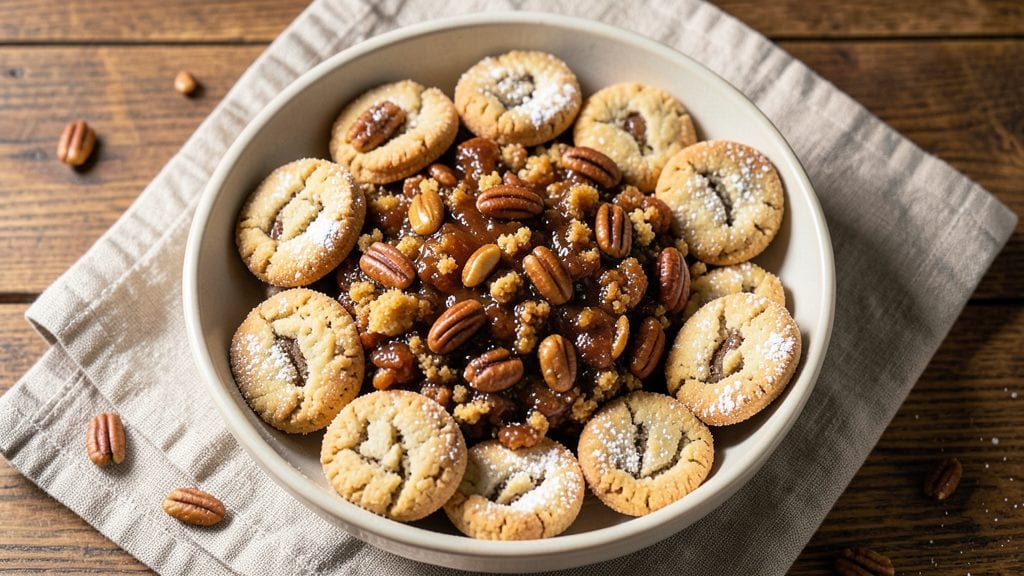
This brickle cookies recipe delivers the perfect balance of buttery, crispy edges and gooey pecan swirls that make them irresistible. The secret lies in chilling the dough thoroughly and rolling it just right before baking—two steps that transform ordinary cookies into restaurant-quality treats.
I've perfected this method over years of baking, ensuring every batch turns out with that signature crackly texture and rich pecan flavor.
What sets these brickle cookies apart is their foolproof technique: a simple dough that's rolled into logs, chilled, sliced, and baked until golden and crisp. The pecan filling swirls through each cookie as it bakes, creating those signature cracks that make them so satisfying.
With just a handful of ingredients and about 30 minutes of active time, you'll have a tray of cookies that look and taste like they came from a Southern bakery.
The result is a cookie with a satisfying crunch that gives way to tender, buttery layers and pockets of caramelized pecans. Each bite delivers that perfect contrast—crispy edges that shatter, followed by soft, buttery centers infused with nutty sweetness.
These cookies stay fresh for days, making them ideal for holiday baking or gifting.
While the classic version uses pecans, you can easily swap in walnuts or almonds for variety. For extra flair, sprinkle a pinch of flaky sea salt on top before baking. Let's get started on creating these buttery, crackly delights that will have everyone asking for the recipe.
Ingredients for brickle cookies
Just twelve ingredients transform into buttery, crackly brickle cookies with nutty swirls.
| Ingredient | Amount | Notes |
|---|---|---|
| All-Purpose Flour 🌾 | 2 ½ cups | Sifted for even texture |
| Unsalted Butter 🧈 | 1 cup | Cold, cubed for dough |
| Granulated Sugar 🍚 | ½ cup | White or light brown |
| Light Brown Sugar 🍚 | ½ cup | Packed firmly |
| Pecans 🥜 | 1 cup | Chopped, toasted lightly |
| Large Eggs 🥚 | 1 whole | Room temperature |
| Vanilla Extract 🍯 | 1 tsp | Pure vanilla preferred |
| Baking Powder 🍞 | 1 tsp | Aluminum-free preferred |
| Salt 🧂 | ½ tsp | Fine sea salt |
| Flaky Sea Salt 🧂 | 1 tsp | For sprinkling tops |
| Heavy Cream 🥛 | ¼ cup | Full-fat for richness |
| Corn Syrup 🍯 | 2 tbsp | Light corn syrup preferred |
The butter and sugars form the foundation—use high-quality unsalted butter (like Plugrá or Land O'Lakes) for that signature richness. Pecans should be raw or lightly toasted—avoid pre-chopped nuts from the bakery section, as they often contain additives. For the dough, cold butter cubes are non-negotiable; they create those signature cracks. If your kitchen runs warm, chill the dough for an extra 30 minutes before rolling. The heavy cream and corn syrup combo in the filling ensures that gooey, caramelized texture that makes these cookies irresistible.
No pecans? Walnuts or almonds work beautifully—just toast them first for deeper flavor. Running short on corn syrup? Honey or maple syrup at half the amount works in a pinch, though the texture will be slightly softer. For a dairy-free option, substitute the heavy cream with full-fat coconut cream (the filling will be lighter but still delicious). The vanilla extract can be swapped for vanilla bean paste if you're feeling fancy—just reduce the amount to ½ teaspoon. And if you're baking at high altitudes, consider adding an extra ¼ teaspoon of baking powder to compensate for the thinner air.
These cookies stay fresh for up to 5 days when stored in an airtight container at room temperature. For longer storage, freeze the dough logs (unrolled) for up to 3 months—just thaw in the fridge overnight before slicing and baking. Once baked, they reheat beautifully in a 200°F oven for 5-7 minutes to restore that crispy edge. I always double the batch—one tray for the family, one for neighbors—because they disappear fast.
Why You'll Love This Recipe
- No Mixer Needed: Mixing dough by hand takes two minutes—no stand mixer, no fuss. I swear by the "smashed butter into sugar" trick; it’s foolproof and gives that perfect crumbly texture.
- Pecan-Caramel Magic: That toasted pecan crunch paired with the buttery, brown-sugar crackle? It’s the kind of flavor combo that makes you reach for a second cookie before the pan even cools.
- Holiday or Snack Attack: Bake a big batch for Christmas gifts (they freeze beautifully) or grab a handful straight from the jar for a 3 p.m. sugar rush. My kids think they’re "fancy cookies," so I let them.
- Dollar Stretch: Butter, sugar, flour—these are pantry staples that won’t break the bank. One batch feeds a crowd, and leftovers last days (if they last that long). Budget-friendly doesn’t mean boring.
Step-by-step instructions for brickle cookies recipe
Here's how to create these buttery, pecan-filled cookies with perfectly crisp edges every time.
Prepare the Pecan Filling
In a small bowl, combine the 1 cup pecans, 0.5 cup granulated sugar, 0.5 cup light brown sugar, 2 tablespoons corn syrup, and 0.25 cup heavy cream. Mix well until the pecans are evenly coated with the sweet mixture. This filling should be moist but not soupy—if it's too dry, add a few drops of water to help it bind.
Transfer the mixture to a microwave-safe bowl and microwave for 1-2 minutes until the sugars begin to caramelize and the mixture thickens slightly. Stir well after microwaving, then let it cool completely before using. The filling should be spreadable but not runny—this ensures clean swirls when you roll the dough.
Make the Cookie Dough
In a large mixing bowl, cream together the 1 cup unsalted butter and 0.5 cup granulated sugar using an electric mixer on medium speed until light and fluffy, about 3-4 minutes. This step is crucial for achieving that signature buttery texture and crisp edges. Scrape down the sides of the bowl occasionally to ensure even mixing.
Add the 1 whole large egg, 1 teaspoon vanilla extract, and mix until fully combined. In a separate bowl, whisk together the 2.5 cups all-purpose flour, 1 teaspoon baking powder, and 0.5 teaspoon salt. Gradually add the dry ingredients to the wet mixture, mixing on low speed until just combined. Avoid overmixing—the dough should be soft but not sticky.
Roll and Fill the Dough
Divide the dough into two equal portions. On a lightly floured surface, roll one portion into a 12-inch circle, about 1/8-inch thick. Spread the cooled pecan filling evenly over the dough, leaving a 1-inch border around the edges. This border prevents the filling from oozing out during baking.
Roll up the dough tightly starting from one edge, pinching the seam to seal. Repeat with the second portion of dough. Wrap each log in plastic wrap and refrigerate for at least 1 hour or up to 24 hours. Chilling firms up the butter, which prevents excessive spreading and ensures those crisp edges we're after.
Bake to Golden Perfection
Preheat your oven to 350°F. Once chilled, slice each log into 1/2-inch thick rounds and arrange them on ungreased baking sheets, leaving 2 inches between cookies. Bake for 12-15 minutes until the edges are deep golden brown and the centers look slightly underbaked. The filling should be soft but not liquid.
Remove from the oven and immediately sprinkle each cookie with flaky sea salt. Let them cool on the baking sheets for 5 minutes before transferring to a wire rack. The salt enhances the buttery flavor and adds a delightful contrast to the sweet filling. Serve warm for the best texture—crisp edges, gooey center, and buttery swirls all in one bite.
Pro Tips For Making Brickle Cookies
- Chill the Dough: Brickle cookies need that firm, crackly texture, and skipping the chill makes it harder to shape. Press the dough into a pan and freeze it for 20 minutes—this prevents spreading and guarantees clean cuts when you slice it later. (Yes, even if you're impatient like me.)
- Toast Pecans First: Raw pecans in brickle cookies taste bland and soak up too much butter. Toast them in a dry pan over medium heat until fragrant and lightly golden—about 5 minutes. Then chop them while still warm so they release their flavor into the dough.
- Use Cold Butter: Cut the unsalted butter into the flour mixture in small cubes, not melted. Cold butter creates those signature flaky layers when the cookies bake. If your kitchen’s warm, chill the butter for 15 minutes first—no one likes a greasy brickle.
- Slice Thin, Stack Tidy: A sharp knife and steady hand make all the difference. Cut the dough into ¼-inch slices for even baking, and stack them loosely on the tray so they don’t smush together. Overlapping leads to uneven edges—no one wants a brickle that looks like a pancake.
Troubleshooting your brickle cookies
Dough Too Sticky
If your dough feels too sticky after mixing, you likely added too much liquid or didn’t chill it properly. First, check your butter—it should be cold and cubed, not melted.
If the dough still feels sticky, sprinkle in 1-2 tablespoons of additional flour while mixing, just until it comes together smoothly. Overworking the dough can also make it sticky, so mix only until combined.
For extra insurance, chill the dough for 30-60 minutes before rolling—this firms up the butter and makes handling much easier. 🧈
Filling Leaks Out
The filling oozing out during baking usually means the dough wasn’t rolled tightly enough or the border wasn’t wide enough. When spreading the filling, leave a 1-inch border around the edges to contain it. Roll the dough very tightly and pinch the seam securely.
If you’re still having issues, slightly underfill the dough—just enough to create swirls without overloading it. Another trick? Chill the filled logs for 1 extra hour before slicing to help set the filling. 🥜
Cookies Spread Too Much
Excessive spreading happens when the butter melts too quickly during baking. Always use cold butter and chill the dough logs for at least 1 hour (longer is better). If your kitchen is warm, consider chilling the dough overnight.
Also, ensure your oven is fully preheated to 350°F—a cold oven can cause uneven baking. For extra control, bake on the middle rack where heat is most consistent. 🌡️
Edges Aren’t Crispy
Crispy edges are all about proper baking time and temperature. If your cookies turn out soft-edged, they likely didn’t bake long enough. Aim for 12-15 minutes until the edges are deep golden brown. For even crispiness, rotate the baking sheets halfway through.
Another tip: underbake slightly—the cookies will firm up as they cool. If your oven runs hot, reduce the temperature to 325°F for a more controlled bake. ⏰
Filling Too Hard or Dry
A dry or hard filling usually means the sugars caramelized too much or the mixture wasn’t cool enough before using. Microwave the filling in 30-second bursts, stirring between each, until just thickened—1-2 minutes total. Let it cool completely before spreading.
If it’s still too dry, add 1 teaspoon of heavy cream to loosen it up. For extra richness, replace the corn syrup with 1 tablespoon of honey (though the texture may be slightly softer). 🍯
Cookies Taste Bland
Bland flavor often comes from using low-quality ingredients or skipping the finishing touches. Always use high-quality butter (like Plugrá) and real vanilla extract. Don’t forget to sprinkle flaky sea salt on top right after baking—it enhances the buttery, sweet flavors dramatically.
For extra depth, toast the pecans lightly before chopping, or add a pinch of cinnamon to the filling. A final drizzle of honey or caramel sauce can also elevate the flavor profile. 💫
Nutrition facts
Frequently asked questions
Why do brickle cookies need to chill before baking?
Chilling the dough logs for at least 1 hour (or overnight) is crucial for two reasons: it firms up the butter so the cookies hold their shape instead of spreading, and it prevents the filling from leaking out during baking. The cold dough also creates those signature crispy edges we all love. Think of it like giving the butter time to "set" properly.
Can I make brickle cookies without pecans?
While pecans give them that classic flavor, you can easily swap in walnuts or almonds instead. Just toast them lightly first to enhance their natural flavor. For a nut-free version, try using dried cranberries or chocolate chips in the filling—just reduce the sugar slightly since these ingredients are already sweet.
How do I store brickle cookies to keep them crispy?
Store them in an airtight container at room temperature for up to 5 days, but separate layers with parchment paper to prevent sogginess. For longer storage, freeze the dough logs (unrolled) for up to 3 months. To revive crispiness, warm them in a 200°F oven for 5-7 minutes before serving. The key is keeping them dry!
Why does my filling ooze out during baking?
This usually happens when the dough isn't rolled tightly enough or the filling border isn't wide enough. Always leave a 1-inch border of plain dough around the edges to contain the filling. Roll the dough very tightly and pinch the seam securely. For extra insurance, chill the filled logs for 1 extra hour before slicing.
Can I make brickle cookies gluten-free?
Yes, but with some adjustments. Replace the all-purpose flour with a 1:1 gluten-free baking flour blend (like Bob's Red Mill) and add ½ teaspoon xanthan gum to improve texture. You may also need to reduce the leavening slightly (try ½ teaspoon baking powder) since gluten-free flours behave differently. Test the dough consistency first—it should be slightly softer than regular dough.