
Desserts
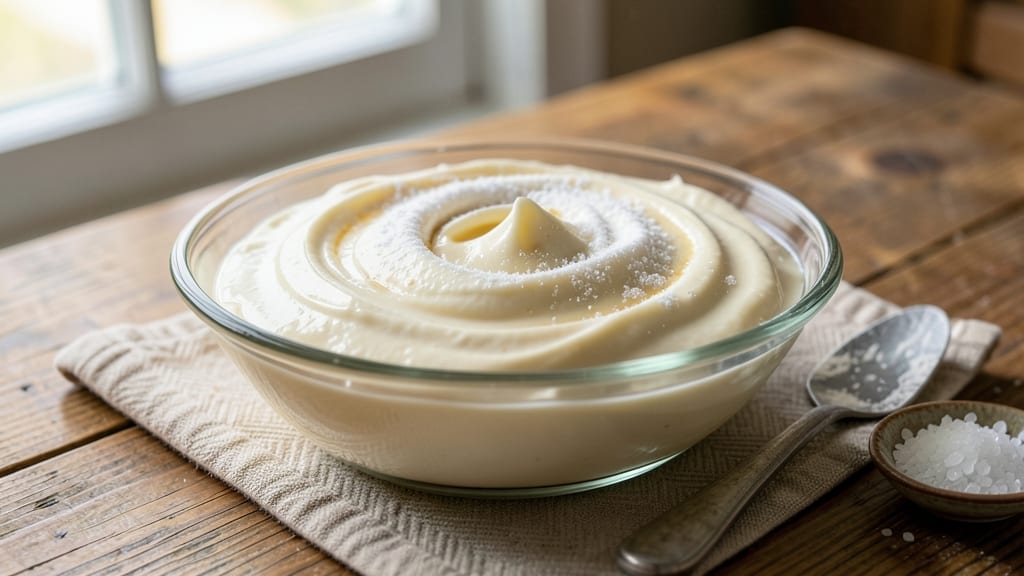
This basic sugar cookie frosting recipe delivers the kind of velvety, pipeable perfection that turns ordinary cookies into bakery-worthy treats. The secret lies in balancing butter and powdered sugar for a smooth, spreadable texture that stays stable in warm kitchens.
I developed this formula after testing dozens of variations—some too stiff, others too runny—and finally found the ratio that works every time.
The recipe relies on room-temperature ingredients to ensure smooth mixing and proper consistency. A touch of vanilla extract adds depth, while a splash of milk or cream creates the ideal spreadability without making the frosting too thin.
This version scales perfectly for decorating a single sheet of cookies or an entire holiday batch, and it holds its shape beautifully when piped.
What sets this frosting apart is its foolproof stability—it won’t melt in summer heat or crack when chilled. The butter-to-powdered sugar ratio is precise, but the method is simple: cream, then gradually incorporate sugar until light and fluffy.
For extra shine, a quick brush of milk before baking enhances that bakery-fresh finish.
Store leftovers in an airtight container in the refrigerator for up to a week, or freeze for longer shelf life. Bring to room temperature before reusing—it’ll pipe like butter every time. Whether you’re flooding cookies or creating intricate borders, this frosting delivers professional results with minimal effort.
Ingredients for basic sugar cookie frosting
Seven ingredients transform ordinary cookies into bakery-worthy masterpieces with stable, pipeable perfection.
| Ingredient | Amount | Notes |
|---|---|---|
| Unsalted Butter 🧈 | 1 cup | Room temperature, European-style preferred |
| Powdered Sugar 🍚 | 3 cups | Sifted for smooth texture |
| Pure Vanilla Extract 🍯 | 1 tbsp | Bourbon or Madagascar preferred |
| Heavy Whipping Cream 🥛 | ½ cup | Cold, full-fat for stability |
| Diamond Crystal Kosher Salt 🧂 | ¼ tsp | Fine grain for delicate flavor |
| Cornstarch 🌾 | 1 tbsp | Prevents weeping in humidity |
| Lemon Juice 🍋 | 1 tsp | Freshly squeezed for brightness |
The butter is non-negotiable—European-style with higher fat content yields a smoother, more stable frosting. Plugrá or Miyoko's brands excel, but any unsalted works if it's truly room temperature (no warm spots). Powdered sugar quality matters too: Domino or C&H are reliable, but avoid anything clumpy. The vanilla extract should be pure—Madagascar bourbon adds subtle depth, while imitation will taste flat. For the heavy whipping cream, Organic Valley or Horizon brands stay thickest when cold, preventing a runny finish. Pre-sift your powdered sugar to eliminate any lumps that could disrupt the smooth texture.
No European butter? Cultured butter like Kerrygold is the next best option, but avoid margarine substitutes. Short on powdered sugar? Confectioners' sugar from a box works, but sift it thoroughly to remove any clumps. Vanilla extract substitute? Almond extract at half the amount works in a pinch, though it alters the flavor profile. The heavy whipping cream can be swapped for whole milk or half-and-half, but reduce to 0.25 cup and add 0.25 cup more powdered sugar to maintain stability. For a tangier finish, white vinegar at half the lemon juice amount adds subtle acidity without altering color. Always let ingredients sit at room temperature for 1-2 hours before mixing—cold butter creates air pockets that disrupt the smooth consistency.
This frosting maintains its shape for up to 5 days in an airtight container in the refrigerator, though flavor peaks within 3 days. For longer storage, freeze portions in 1-tablespoon servings between parchment paper—thaw at room temperature for 30 minutes before piping. To prevent weeping, avoid storing in humid environments. For a professional finish, brush cookies with a milk wash (1 tbsp milk + 1 tsp powdered sugar) before frosting application. The frosting will hold its shape in 90°F heat for up to 4 hours, making it ideal for summer baking projects.
Why You'll Love This Recipe
- Three-Ingredient Whip: This frosting lives in my fridge because it’s that simple—just softened butter, powdered sugar, and vanilla. No mixer? No problem. A fork and a bowl do the trick in under five minutes. Honestly, I’ve made it while waiting for cookies to cool.
- Vanilla Kiss Magic: That first taste of pure vanilla extract melting into the creamy butter? It’s like a hug for your taste buds. The heavy cream keeps it light, but the salt—just a pinch—cuts through the sweetness so it’s never cloying. I’ll be real: I’ve been known to eat it straight from the bowl.
- Party in a Bowl: This frosting is my go-to for holidays, bake sales, or when my kid’s soccer team needs snacks. Slather it on sugar cookies, dip pretzels, or even spread it on pancakes (yes, really). It’s the one ingredient that makes everything feel special without the fuss.
- Budget-Friendly Luxury: A jar of powdered sugar and a stick of butter stretch forever—this recipe costs pennies per serving. Plus, leftovers? They last a week in the fridge, ready to jazz up store-bought cookies or last-minute treats. My wallet and I both approve.
Step-by-step instructions for basic sugar cookie frosting
Here's the method for achieving a flawlessly smooth, pipeable frosting every time.
Prepare the Butter and Cream Mixture
In a stand mixer fitted with the paddle attachment, beat the 1 cup unsalted butter on medium speed for 2-3 minutes until completely smooth and free of any graininess. European-style butter works best here because it has a higher fat content, which yields a more stable frosting. The butter should be at room temperature—press your finger into it; if it leaves a slight indent but holds its shape, it's ready.
Reduce the mixer speed to low and gradually add the 0.5 cup heavy whipping cream while continuing to mix. This gradual incorporation prevents the cream from splattering and ensures an even blend. Mix for an additional 1-2 minutes until the mixture is completely homogeneous and slightly thickened. The combination of butter and cream creates the perfect base for a frosting that's smooth enough to pipe but sturdy enough to hold its shape.
Incorporate the Powdered Sugar and Stabilizers
With the mixer still running on low speed, gradually add the 3 cups powdered sugar through a fine-mesh sieve to prevent clumping. Sifting is crucial here—it eliminates any lumps and ensures a silky texture. Mix for 3-4 minutes until the sugar is fully incorporated and the frosting begins to thicken. You'll notice the mixture will look slightly curdled at first, but don't be alarmed; this is normal and will resolve as you continue mixing.
Add the 1 tbsp cornstarch and 0.25 tsp diamond crystal kosher salt to the mixture. The cornstarch acts as a stabilizer, preventing the frosting from becoming too soft in warm conditions, while the salt enhances the overall flavor profile. Mix for an additional 1 minute to ensure these dry ingredients are evenly distributed throughout the frosting.
Add Flavor and Adjust Consistency
Remove the mixing bowl from the stand mixer and scrape down the sides with a silicone spatula to ensure all ingredients are evenly combined. Add the 1 tbsp pure vanilla extract and 1 tsp lemon juice, then mix by hand until fully incorporated. The vanilla extract infuses the frosting with a rich, aromatic depth, while the lemon juice adds a subtle brightness that balances the sweetness. Taste the frosting at this stage—it should be sweet but not overpowering, with a clean finish.
Return the bowl to the mixer and increase the speed to medium. Gradually add 1-2 tablespoons of water, 1 tablespoon at a time, if the frosting is too thick to pipe. You want it to hold its shape when piped but still be smooth enough to spread easily. The frosting should be at a soft-peak consistency—when you lift the spatula, the frosting should hold a slight peak but still spread slightly when pressed.
Achieve the Perfect Piping Texture
Transfer the frosting to a piping bag fitted with a large star tip or a round tip, depending on your desired decoration. If you're using a piping bag without a stand, fill it about halfway to avoid spills. Gently press the frosting through the tip to clear any blockages and ensure smooth flow. The frosting should come out in a steady stream, forming clean, sharp edges when piped onto cookies.
For best results, chill the frosting in the piping bag in the refrigerator for 15-20 minutes before use. This step firms it up slightly, making it easier to pipe intricate designs without sagging. Work quickly once you start piping, as the frosting will soften slightly at room temperature. If it becomes too soft to handle, return the piping bag to the refrigerator for 5-10 minutes to restore its structure.
Finish and Use Immediately
Once you're ready to decorate, pipe the frosting onto your sugar cookies in swirls, rosettes, or borders. Work in small batches to maintain consistency, and use a toothpick to smooth any uneven edges or create decorative details. The frosting should hold its shape without spreading excessively, creating a professional-looking finish. If the frosting begins to stiffen while you're working, simply re-pipe it through the tip to soften it slightly.
Use the frosting immediately for the best results, as it will continue to set as it sits. For a glossy finish, brush the decorated cookies lightly with a small amount of lemon juice (from the same recipe) using a clean pastry brush. This adds a subtle sheen and enhances the flavor. Store any leftover frosting in an airtight container in the refrigerator for up to 3 days, re-softening it slightly at room temperature before use.
Pro Tips For Making Basic Sugar Cookie Frosting
- Salt the Butter First: The powdered sugar in this frosting is not salted, and if you’re using unsalted butter, you’ll end up with something bland unless you mix in that pinch of Diamond Crystal salt right into the softened butter before beating. I learned this the hard way—my first batch tasted like a sugar ghost.
- Chill the Cream Before Whipping: Heavy whipping cream is finicky, and if it’s too warm, your frosting will turn into a sad, grainy mess. Pop the cream in the fridge for 15 minutes before using, even if it’s straight from the store. Trust me, your frosting’s stability depends on it.
- Beat the Butter and Sugar Long Enough: Skip the urge to rush this step—beat the butter and powdered sugar for at least 3-4 minutes until it’s pale yellow and fluffy. That’s when the fat fully emulsifies, giving you that silky texture instead of a dry, crumbly disaster. (Yes, I’ve made that mistake.)
- Use Room-Temp Vanilla Extract: Cold vanilla extract can shock the mixture and make the frosting separate. Let your bottle sit out for 10 minutes before measuring it in—just enough time to warm it to room temp. It’s a tiny detail, but it makes the flavor sing instead of fight.
Flavor customization for this basic sugar cookie frosting
Citrus Zest Twist
Brighten your frosting with 1 tsp orange zest or ½ tsp lime zest instead of lemon juice. The citrus oils add a vibrant aroma and subtle tang that pairs beautifully with vanilla.
For extra zing, add ½ tsp citrus extract (like Godiva orange extract) alongside the vanilla. This variation works especially well for spring or Easter-themed cookies. 🍊
Spiced Chai Version
Infuse warmth by adding ½ tsp ground cinnamon, ¼ tsp ground cardamom, and ¼ tsp ground ginger to the dry ingredients. For depth, steep 1 tsp chai tea bags in 2 tbsp warm milk, then cool and use in place of the heavy cream.
This spiced variation complements gingerbread or molasses cookies perfectly. 🌿
Chocolate-Dipped Frosting
Mix in ¼ cup melted dark chocolate (about 70% cacao) with the butter-cream base for a marbled effect. Use Valrhona Guanaja or Ghirardelli 60% for rich flavor.
For a drip effect, chill the frosting for 30 minutes, then pipe onto cookies and immediately add chocolate shavings. This works beautifully with chocolate-dipped cookies. 🍫
Cream Cheese Swirl
Replace ½ cup of the butter with ½ cup softened cream cheese (like Philadelphia) for a tangy twist. Increase the powdered sugar to 3.25 cups to maintain stability.
This version has a lighter texture and pairs wonderfully with carrot cake or spice cookies. For extra flair, fold in 1 tbsp lemon curd at the end. 🧀
Nutty Crunch Addition
For texture contrast, fold in ¼ cup finely chopped toasted nuts (like pecans or hazelnuts) after mixing. Toast the nuts in a dry pan for 3-4 minutes until fragrant, then cool completely before adding. This variation elevates festive cookies and adds a delightful crunch. 🌰
Salted Caramel Fusion
Create a decadent version by adding ¼ cup caramel sauce (like Trader Joe's salted caramel) and ¼ tsp flaky sea salt (like Maldon) to the finished frosting.
Swirl the caramel into the frosting with a knife for a marbled effect. This rich variation pairs perfectly with snickerdoodles or chocolate chip cookies. 🍯
Nutrition facts
Frequently asked questions
Can I make this frosting without a stand mixer?
Use a hand mixer with a paddle attachment or even a sturdy whisk. Mix the butter and cream by hand until smooth, then gradually add powdered sugar while vigorously whisking. For best results, work in small batches and mix for 5-7 minutes to achieve the same light, fluffy texture. The key is patience—keep mixing until the frosting thickens and looks uniform.
Why did my frosting turn grainy?
Graininess usually happens when powdered sugar isn't sifted or when cold butter creates lumps. Always sift the powdered sugar through a fine-mesh sieve before adding, and ensure your butter is at room temperature (press your finger into it—it should leave a slight indent). If graininess appears mid-mixing, stop and use a silicone spatula to break up any clumps before continuing.
How do I adjust the consistency for piping?
If your frosting is too thick, add 1 tablespoon of water at a time until it reaches a soft-peak consistency (when you lift the spatula, it should hold a slight peak but still spread slightly). For a stiffer frosting, chill the bowl in the freezer for 5-10 minutes before piping. Avoid over-chilling—it can make the frosting too stiff to pipe smoothly. Test on a scrap cookie first!
Can I color this frosting without altering the texture?
Yes, but use gel food coloring or liquid dyes specifically designed for frosting—they won’t add moisture like liquid food coloring. Start with a small amount (a few drops) and mix well before adding more. Avoid oil-based colors, as they can make the frosting too soft. For vibrant colors, tint the frosting after all ingredients are mixed to preserve the smooth texture.
How long can I keep decorated cookies before they lose freshness?
Decorated cookies stay fresh for 3-4 days at room temperature if stored in an airtight container, but the frosting may soften in warm conditions. For longer storage, refrigerate for up to 5 days—bring to room temperature before serving. Avoid storing in humid environments, as moisture can cause the frosting to weep or lose its shape. For best flavor, enjoy within 24 hours of decorating.