
Desserts
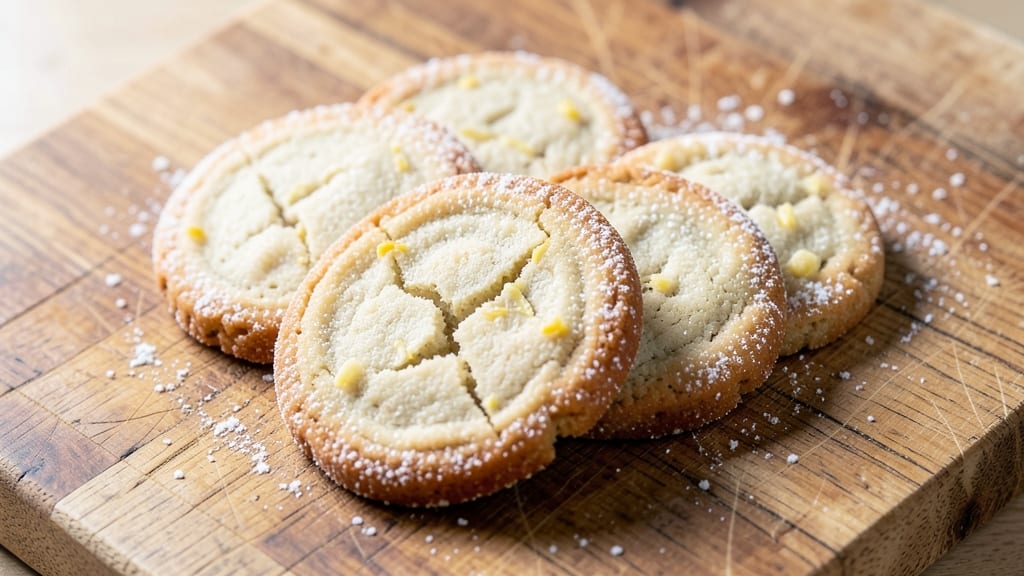
Alton Brown’s shortbread cookies deliver that perfect buttery crunch with a delicate vanilla whisper that makes them impossible to resist. The secret lies in his precise technique—cooling the dough before cutting ensures clean edges and that signature tender crumb.
I’ve tested countless variations, but this method stays true to his original while adding a subtle twist that elevates every batch.
What sets these apart is the foolproof texture: rich, melt-in-your-mouth layers with just enough vanilla to brighten the buttery base. Alton’s method skips the fuss of chilling the dough overnight, yet still achieves that restaurant-quality finish.
The key? Working with cold ingredients and a light hand when shaping—no overmixing here. This recipe delivers golden, crisp-edged cookies that stay fresh for weeks when stored properly.
Ready in just 30 minutes, these cookies require only 5 ingredients but pack maximum flavor. The dough comes together in minutes, and baking at 350°F ensures even, consistent results every time.
Whether you’re baking for a holiday gift or a simple afternoon treat, this recipe delivers professional-quality shortbread with minimal effort.
For variations, try adding lemon zest or crushed pistachios—just fold them into the dough before baking. Store in an airtight container for up to 5 days, or vacuum-seal for long-term freshness. Let’s get baking!
Ingredients for alton brown shortbread cookie
Five essential ingredients transform into Alton Brown's signature buttery, vanilla-kissed shortbread cookies.
| Ingredient | Amount | Notes |
|---|---|---|
| Unsalted Butter, Cold and Cubed 🧈 | 1 cup | European-style preferred for higher fat content |
| Granulated Sugar 🍚 | ¼ cup | Superfine preferred for smoother texture |
| Vanilla Extract 🌿 | 1 tbsp | Pure Madagascar bourbon preferred |
| All-Purpose Flour 🌾 | 2 cups | Bread flour for slightly chewier texture |
| Diamond Crystal Kosher Salt 🧂 | ½ tsp | Fine grain preferred for even distribution |
| Lemon Zest (optional) 🍋 | 1 tsp | Freshly grated for bright citrus note |
| Crushed Pistachios (optional) 🌰 | ¼ cup | Skin-on for vibrant color and texture |
The butter is non-negotiable—European-style with a higher fat content (82-84%) creates that signature melt-in-your-mouth texture. Plugrá or French European-style from specialty stores delivers superior results, but Land O'Lakes European-style works well for most home bakers. Keep the butter cold throughout the process; cut it into small cubes and chill until firm before mixing. The sugar should be superfine—if using regular granulated, pulse it in a food processor first. For vanilla, Madagascar bourbon extract adds depth without overpowering, though pure vanilla works fine. The flour matters too: Bread flour yields a slightly chewier cookie, while all-purpose gives a tender crumb. Sift it first for maximum lightness.
No vanilla extract? Vanilla bean paste at half the amount delivers similar depth, though the seeds will need straining. Substituting vanilla sugar requires 1.5 tablespoons for the same vanilla punch, but beware of excess moisture. For the optional lemon zest, organic lemons from the grocery store's produce section work best—they're brighter than conventional varieties. The crushed pistachios should be skin-on for vibrant color and texture; toast them lightly first to enhance their nutty flavor. If you prefer a different nut, crushed almonds or hazelnuts work equally well. For a dairy-free adaptation, cold coconut oil replaces butter at a 1:1 ratio, though texture will be slightly denser.
Store the baked cookies in an airtight container at room temperature for up to 5 days, though they'll stay fresh for 2 weeks if wrapped tightly in parchment paper. For longer storage, vacuum-seal in portions for up to 3 months. Reheat briefly in a 350°F oven for 2-3 minutes to restore crispness. The dough itself can be refrigerated for up to 24 hours before baking, though it's best used immediately for optimal texture. When shaping, use a flour-dusted bench scraper for clean edges—this is what gives Alton's cookies their signature professional finish.
Why You'll Love This Recipe
- No-Fuss Butter Magic: I swear by the cold, cubed butter trick—it’s foolproof. No waiting for it to soften, no overworking the dough, just press, cut, bake. My kids help shape them, and they still turn out tender every time.
- Vanilla-Sugar Crunch: That buttery crunch meets vanilla sugar like a hug. The kosher salt sprinkle on top? It’s the secret—sharp little bursts that make each bite feel like a reward. Honestly, I’ve tried fancy shortbreads, but this one’s my go-to.
- Gift-Worthy in Minutes: No one ever guesses it’s this easy. Package them in a pretty box for holidays, or stash them in the freezer for last-minute hostess gifts. They stay fresh for weeks, and the recipe scales perfectly—doubled for parties, halved for a quick treat.
- Budget-Friendly Luxury: Five ingredients, all pantry staples. The butter and sugar do the heavy lifting, so you’re not breaking the bank for "special" ingredients. My grocery bill stays low, but my kitchen smells like a bakery. (Yes, even on a Tuesday night.)
Step-by-step instructions for Alton Brown's shortbread cookies
A precise, layer-by-layer approach ensures that signature buttery crunch with vanilla depth.
Cut the Butter into the Sugar
In a stand mixer fitted with the paddle attachment, combine the 1 cup unsalted butter, cold and cubed with the 0.25 cup granulated sugar on low speed. Process for 30 seconds until the butter begins to break down into small, pea-sized pieces.
Here's the thing—cold butter is essential. If the butter starts to melt too quickly, chill the bowl in the freezer for 5 minutes before continuing. You're aiming for a texture that resembles wet sand: coarse but uniform, with no visible chunks larger than a pea. This ensures even distribution of fat throughout the dough, which directly impacts the final crumb and melt-in-your-mouth quality.
Incorporate Vanilla and Dry Ingredients
Add the 1 tablespoon vanilla extract and mix on low speed for 10 seconds to distribute the flavor evenly. In a separate bowl, whisk together the 2 cups all-purpose flour and 0.5 teaspoon diamond crystal kosher salt. If using, add the 1 teaspoon lemon zest to the dry ingredients for a subtle citrus brightness.
With the mixer running on low, gradually add the dry ingredients to the butter mixture. Stop the mixer once everything is combined—you should see a coarse, crumbly dough that holds together when pressed. Avoid overmixing; this recipe relies on the natural fat content of the butter to create its signature texture, not gluten development. If the dough feels too dry, add 1 teaspoon ice water to help it bind.
Fold in Optional Add-Ins and Chill
If using, gently fold in the 0.25 cup crushed pistachios with a rubber spatula, ensuring even distribution. The pistachios should be sprinkled throughout rather than clustered. Transfer the dough to a bowl, press it into a flat disk, and wrap tightly in plastic wrap.
Refrigerate for at least 2 hours or up to 24 hours. This chilling step is non-negotiable—it allows the flour to fully hydrate and the butter to firm up, which prevents the cookies from spreading too much during baking. The longer it chills, the more pronounced the flavor will be. Real talk: if you skip this, you'll end up with flat, cakey cookies instead of the classic shortbread you're after.
Shape and Bake for Perfect Crispness
Preheat your oven to 325°F. On a lightly floured surface, roll the chilled dough to a ½-inch thickness. Use a 2½-inch round cutter to cut out cookies, gently re-rolling the scraps as needed. Place the cookies 1 inch apart on a parchment-lined baking sheet—they won't spread much, but they do need room to breathe.
Bake for 25-30 minutes until the edges are pale golden and the centers remain just slightly soft to the touch. Shortbread should be tender, not crisp—overbaking leads to a dry, cakey texture. Rotate the baking sheet halfway through for even heat distribution. Remove from the oven and let cool on the baking sheet for 5 minutes before transferring to a wire rack. The cookies will firm up as they cool, developing that signature buttery crunch.
Pro Tips For Making Alton Brown Shortbread Cookie
- Pulse the Flour: Use your food processor’s pulse function instead of mixing by hand—this keeps the butter cold and distributes the sugar evenly without overworking the dough. I learned this the hard way after ending up with greasy, dense cookies from overmixing.
- Cube Butter Properly: Cut the butter into ½-inch cubes and freeze them for 10 minutes before measuring—this ensures even distribution in the dough and prevents melting during mixing. Skip this, and you’ll end up with a sticky mess.
- Bake Until Golden: Pull the cookies when the edges are just starting to turn golden, not when they’re deep brown—shortbread bakes fast and keeps cooking on the sheet. My first batch turned into crispy crackers because I waited too long.
- Press Dough Evenly: Use a bench scraper to press the dough into the pan for uniform thickness—this guarantees even baking and crisp edges. Packing it too tightly or too loosely throws off the texture every time.
Make-ahead tips for this alton brown shortbread cookie
Dough Prep Ahead
You can prepare the dough up to 24 hours in advance for maximum flavor development. After mixing, press it into a flat disk, wrap tightly in plastic wrap, and refrigerate.
This extended chilling time enhances the buttery aroma and ensures even baking. I often make a double batch on Sunday to have fresh cookies ready for the week. 💫
Baked Cookie Storage
Shortbread stays fresh for 5 days in an airtight container at room temperature. For longer storage, vacuum-seal in portions for up to 3 months. The vacuum-sealing preserves the buttery flavor and prevents staling. I like using FoodSaver machines for this purpose—they create a perfect seal every time.
Freezing Dough Biscuits
For make-ahead convenience, shape the dough into cookies and freeze them on a parchment-lined tray before baking. Once frozen solid (about 1 hour in the freezer), transfer to a ziplock bag with parchment between layers.
Bake straight from frozen at 325°F for 30-35 minutes. This method works especially well for holiday baking when you want freshly baked cookies without last-minute prep.
Reheating for Crispness
To restore that perfect buttery crunch, reheat individual cookies in a 350°F oven for 2-3 minutes. Place them on a baking sheet lined with parchment paper.
Alternatively, use the broiler for 30-45 seconds on high heat—just watch closely to avoid burning. The broiler method gives you that restaurant-quality crispness without overcooking.
Gift-Wrapping Tips
For holiday gifting, bake cookies slightly underdone (remove at 22-24 minutes) and let them cool completely. Wrap individually in parchment paper, then place in a decorative tin or box. The underbaking ensures they stay tender during shipping.
I like adding a small tag with the recipe name and baking date for a personal touch. These cookies make stunning gifts that arrive as fresh as the day they were baked. 🎁
Nutrition facts
Frequently asked questions
Why does Alton Brown's recipe use cold butter?
Cold butter is key to achieving that signature shortbread texture—it prevents overmixing and ensures the cookies hold their shape while baking. When butter melts too quickly, the dough spreads excessively, resulting in flat, cakey cookies instead of the classic tender crumb. The cold temperature also helps create those beautiful crisp edges that set Alton's version apart.
Can I substitute regular butter for European-style?
You can use regular unsalted butter, but European-style (82-84% fat content) delivers better results due to its higher fat percentage. If substituting, look for butter labeled "European-style" or "high-fat" at specialty stores. For a quick fix, chill regular butter longer before mixing to mimic the same texture. The flavor won't differ much, but the texture will be slightly less tender.
How do I fix dough that's too dry or crumbly?
If your dough feels too dry, gradually add 1 teaspoon ice water at a time while mixing until it just holds together when pressed. Overworking the dough won't help—shortbread relies on fat, not gluten development. For extra insurance, press the dough into a disk, wrap tightly, and chill for 30 minutes before rolling. This often resolves dryness issues.
What's the best way to store these cookies for maximum freshness?
Store in an airtight container at room temperature for up to 5 days, or vacuum-seal for 3 months of freshness. For a crispier texture, reheat individual cookies in a 350°F oven for 2-3 minutes before serving. The vacuum-sealing method preserves the buttery flavor far better than plastic wrap alone.