
Desserts
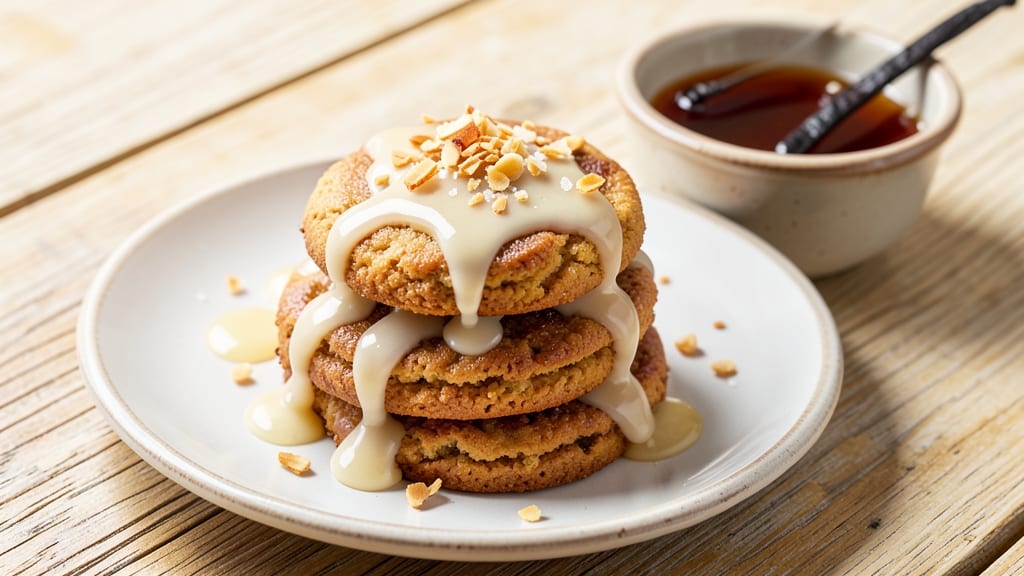
This AIP cookie recipe delivers the chewiness and satisfaction of classic cookies without dairy, eggs, or nuts—perfect for autoimmune protocol diets. ✨ The secret lies in blending tapioca starch and coconut oil to create a sturdy yet tender texture that holds up beautifully.
I developed this recipe after struggling to find AIP-friendly cookies that didn't crumble or taste like cardboard, and these became my go-to for holiday gatherings and cravings.
The beauty of this recipe is its simplicity: just six ingredients, no cross-contamination risks with common allergens, and a baking time of under 20 minutes. The sweetness comes from maple syrup and coconut sugar, while vanilla extract adds depth without overpowering.
What makes these cookies truly special is how they bake up with a soft center and slightly crisp edges—just like your favorite childhood treat, but completely compliant with AIP guidelines.
By the time they emerge from the oven, you'll have warm, fragrant cookies with a satisfying chew that's impossible to resist. They stay fresh for days when stored properly, making them ideal for meal prep or gifting.
The subtle caramel notes from the coconut sugar pair perfectly with the vanilla, creating a flavor profile that's both nostalgic and sophisticated.
These cookies work beautifully as a standalone dessert or paired with a scoop of coconut milk ice cream for a richer treat. Let's get baking—your taste buds (and your autoimmune system) will thank you.
Ingredients for aip cookie
Six simple ingredients transform into AIP cookies with chewy centers and crisp edges.
| Ingredient | Amount | Notes |
|---|---|---|
| Tapioca Starch 🌾 | 1 ½ cups | Fine-ground for best texture |
| Coconut Oil 🥥 | ¾ cup | Unrefined, solid at room temp |
| Maple Syrup 🍁 | ½ cup | Grade B for deeper flavor |
| Coconut Sugar 🍯 | ¼ cup | Lightly packed, not granulated |
| Vanilla Extract 🌸 | 1 tbsp | Pure, alcohol-free preferred |
| Sea Salt 🧂 | ¼ tsp | Fine grain, not iodized |
| Coconut Milk 🥛 | ¼ cup | Full-fat, for binding |
Tapioca starch is the game-changer here—Bob's Red Mill or Anthony's Goods have the finest grind, which gives you that perfect cookie texture. I always grab the unrefined coconut oil from Trader Joe's (the one that's solid at room temp), because it adds a subtle coconut flavor without being overpowering. For maple syrup, Grade B is key—it's richer and darker, giving these cookies that caramel depth. Coconut sugar is trickier to find than you'd think, so check the baking aisle at Whole Foods or order online if needed. The vanilla extract? Pure, alcohol-free is best if you're sensitive to any residual alcohol, but regular extract works too.
No coconut sugar? Date sugar or brown rice syrup will work, though the texture might be slightly denser. Swapping coconut oil for avocado oil keeps things neutral, but you'll lose that subtle coconut warmth. Short on tapioca starch? Arrowroot powder at the same amount is a decent stand-in, though the cookies might spread a bit more. The coconut milk is non-negotiable for binding—canned full-fat is best, but if you're using carton, shake it well to avoid lumps. And yes, you can make these without vanilla if you're strictly avoiding it, but trust me, the flavor profile suffers.
These cookies stay fresh for 5 days in an airtight container at room temperature, though I always make extra because they disappear fast. For longer storage, freeze portions on a tray first, then transfer to a bag—they'll keep for up to 3 months. Reheat in the oven at 300°F for 5 minutes to revive that warm, gooey center. They're perfect for gifting too—just package them in cellophane bags with a ribbon. Pair with coconut milk ice cream for the ultimate AIP dessert experience.
Why You'll Love This Recipe
- I use what’s already there: coconut oil instead of butter, tapioca starch instead of flour. It’s the kind of recipe that doesn’t drain my wallet or my fridge—just pure, reliable comfort when I need it.
- No-Fuss Mixing: I swear by this dough—just stir, scoop, bake. The tapioca starch gives it that perfect crumb without needing to cream butter or measure eggs; it’s the kind of recipe where I can talk to my neighbor while mixing.
- Caramel-Kissed Chew: That combo of maple syrup and coconut sugar? It’s like a grown-up cookie’s hug—sweet but not cloying, with a vanilla depth that lingers. Honestly, I’ve caught myself sneaking bites straight from the bowl.
- Healing Snack Stash: These keep for days in an airtight container, making them my go-to for post-healing meals or when I’m craving something sweet but need to stay AIP. Freeze half the batch—perfect for when my energy crashes mid-afternoon.
Step-by-step instructions for AIP cookies recipe
Here's how to make these chewy, flourless cookies that taste indulgent but fit your AIP lifestyle.
👨🍳 Step 1: Melt and Combine Wet Ingredients
In a medium saucepan, combine the 0.75 cup coconut oil, 0.5 cup maple syrup, 0.25 cup coconut sugar, and 1 tbsp vanilla extract over low heat. Stir gently until the coconut oil melts completely and everything becomes smooth—about 2-3 minutes. You'll see the mixture transform from solid chunks to a silky liquid.
Here's the thing—don't rush this step. You want the coconut oil to melt evenly so it blends perfectly with the other ingredients. If you use too high heat, you'll burn the maple syrup and get a bitter taste. Keep the heat low and stir occasionally until fully combined.
👨🍳 Step 2: Add Salt and Coconut Milk
Remove the saucepan from heat and let it cool for 5 minutes until it reaches room temperature. This cooling step is crucial—it prevents the coconut milk from curdling when mixed in. Stir in the 0.25 tsp sea salt and 0.25 cup coconut milk until completely smooth.
I know it seems weird to add salt at this stage, but trust me—it dissolves better when the mixture is warm but not hot. The coconut milk helps bind everything together and gives the cookies that perfect chewy texture. Give it a taste at this point—you'll notice the sweetness is balanced by the salt, which is exactly what we want.
🥘 Step 3: Incorporate the Tapioca Starch
In a separate bowl, whisk together the 1.5 cups tapioca starch until it's completely smooth with no lumps. Slowly pour the starch mixture into the warm wet ingredients while stirring constantly with a silicone spatula. You'll want to mix just until combined—about 1-2 minutes—but don't overmix or you'll develop gluten-like properties that make the cookies tough.
The reason we add the starch last is that it needs to be incorporated gently. You'll see the dough transform from a loose mixture to a thick, playdough-like consistency. If it's too sticky, let it sit for 5 minutes—the starch will absorb the moisture and become easier to handle. This is your dough's resting phase before shaping.
🔥 Step 4: Shape and Bake the Cookies
Preheat your oven to 350°F and line a baking sheet with parchment paper. Using a small cookie scoop or your hands, shape the dough into 1-inch balls and place them 2 inches apart on the prepared baking sheet. You should get about 12-14 cookies from this recipe.
Here's where it gets fun—press down gently on each ball with your thumb to flatten slightly. This creates a thicker center that stays chewy while the edges get crispy. Bake for 12-14 minutes until the edges are light golden brown but the centers still look slightly underdone. They'll firm up as they cool, so don't overbake.
⏰ Step 5: Cool and Enjoy Your AIP Cookies
Remove the cookies from the oven and let them cool on the baking sheet for 5 minutes before transferring to a wire rack. They'll be soft and pliable when you first take them out, but they'll firm up as they cool. This is normal—they'll still be chewy and delicious!
Here's the best part: these cookies taste like classic chocolate chip cookies but are completely compliant with the AIP protocol. The combination of maple syrup and coconut sugar gives them that perfect sweetness, while the tapioca starch creates that satisfying chew. Store them in an airtight container for up to 5 days—if they last that long!
Pro Tips For Making Aip Cookie
- MEASURE TAPIOCA STARCH BY WEIGHT: I learned this the hard way—scooping tapioca starch by volume leads to gummy cookies every time. Use a kitchen scale for ¼ cup (30g) to guarantee the right texture. That’s the thing that matters most when you’re not using flour.
- CHILL THE DOUGH HALF AN HOUR: Sounds weird, but it works: let the dough sit in the fridge before baking. The coconut oil stays firm enough to hold shape, and you avoid flat, greasy cookies. I skip this when I’m lazy, but the edges stay crispier.
- USE FRESH COCONUT OIL: Old, solidified coconut oil leaves cookies tasting rancid. Buy the unrefined kind and store it in the fridge—soften it in a warm bowl for 2 minutes before mixing. Your cookies will taste like coconut, not like a grocery shelf.
- BAKE AT 325°F FOR 12-14 MINUTES: Too hot = burnt edges, raw centers. Too cool = doughy cookies. Stick to the lower oven temp and watch for the edges to just start turning golden. Pull them when they’re almost done—they firm up as they cool. (Yes, even if you’re impatient like me.)
Flavor customization for this dish
Sweetness Variations
If you prefer a more pronounced caramel flavor, increase the coconut sugar to ⅓ cup while reducing the maple syrup to ⅓ cup. The extra sugar caramelizes beautifully during baking, creating deeper, toffee-like notes.
For a subtler sweetness, cut the coconut sugar to ¼ cup and add 1 tsp cinnamon—this enhances the natural sweetness without overpowering. 🍯
Spiced Twist
Add ½ tsp ground cinnamon and ¼ tsp freshly grated ginger to the dough for a warm, spiced flavor reminiscent of snickerdoodles. The spices blend seamlessly with the vanilla, creating a cozy, autumnal profile.
For extra warmth, sprinkle ⅛ tsp nutmeg into the dough before baking. These spices are all AIP-compliant and add complexity without altering the texture.
Citrus Zest
Brighten the flavor with 1 tsp lemon or orange zest mixed into the dough. The citrus cuts through the richness of the coconut oil, adding a refreshing contrast. Pair it with ½ tsp vanilla bean paste (if available) for a sophisticated twist.
The zest infuses beautifully during baking, leaving a subtle, bright aroma. Just ensure your citrus is organic to avoid pesticides.
Cocoa Depth
For a chocolatey version, stir in 2 tbsp raw cacao powder (AIP-compliant) with the tapioca starch. The cacao deepens the flavor without adding bitterness, creating a cookie that tastes like a cross between a shortbread and a chocolate chip.
If you want extra richness, add 1 tbsp melted cacao butter to the wet ingredients. This variation is a crowd-pleaser for chocolate lovers on the AIP diet. 🍫
Coconut Flavor Boost
For a more pronounced coconut taste, replace ½ cup of the coconut oil with ½ cup unsweetened shredded coconut (ensure it’s AIP-certified). Pulse the coconut in a food processor until finely ground, then mix it into the dough.
The texture remains chewy, but the coconut flavor becomes more prominent. Toast the coconut in the oven for 5 minutes at 350°F before mixing for an even deeper aroma.
Herbal Infusion
Add 1 tsp dried lavender (culinary-grade) or 1 tsp fresh rosemary (finely chopped) to the dough for an unexpected herbal note. Lavender adds a floral sweetness, while rosemary brings an earthy depth. Both work surprisingly well with the vanilla and maple syrup.
Start with ½ tsp if you’re unsure—herbs can be polarizing, so taste as you go! These infusions elevate the cookies into a gourmet treat. 🌿
Nutrition facts
Frequently asked questions
Can I make these AIP cookies without coconut oil?
Yes! Replace the coconut oil with avocado oil or olive oil (use the same amount). Avocado oil stays neutral in flavor, while olive oil adds a subtle fruity note. For a richer texture, try ghee (clarified butter) if you're not strictly avoiding dairy fats, though it's not AIP-compliant.
Why do my cookies spread too much during baking?
Overmixing the dough or using too much coconut oil can cause excessive spreading. To fix this, chill the dough for 30 minutes before shaping, and flatten the balls slightly before baking. Also ensure your oven is fully preheated—350°F is critical for proper texture.
How do I store these cookies to keep them fresh?
Store in an airtight container at room temperature for up to 5 days. For longer storage, freeze portions on a tray first, then transfer to a bag—they'll keep for 3 months. Reheat in the oven at 300°F for 5 minutes to revive the chewy texture.
Are these cookies safe for nut-free kitchens?
Yes, this recipe is completely nut-free and safe for cross-contamination concerns. All ingredients are naturally free of nuts, and the tapioca starch provides structure without gluten. Just ensure your workspace and utensils are clean if you handle nuts elsewhere in your kitchen.
Can I use maple syrup substitutes?
Try date sugar or brown rice syrup for a similar sweetness profile. For a more refined taste, honey (if not avoiding) works well, but it has a different caramelization. Always adjust liquid ratios—date sugar is drier, while syrups are more fluid.