Desserts
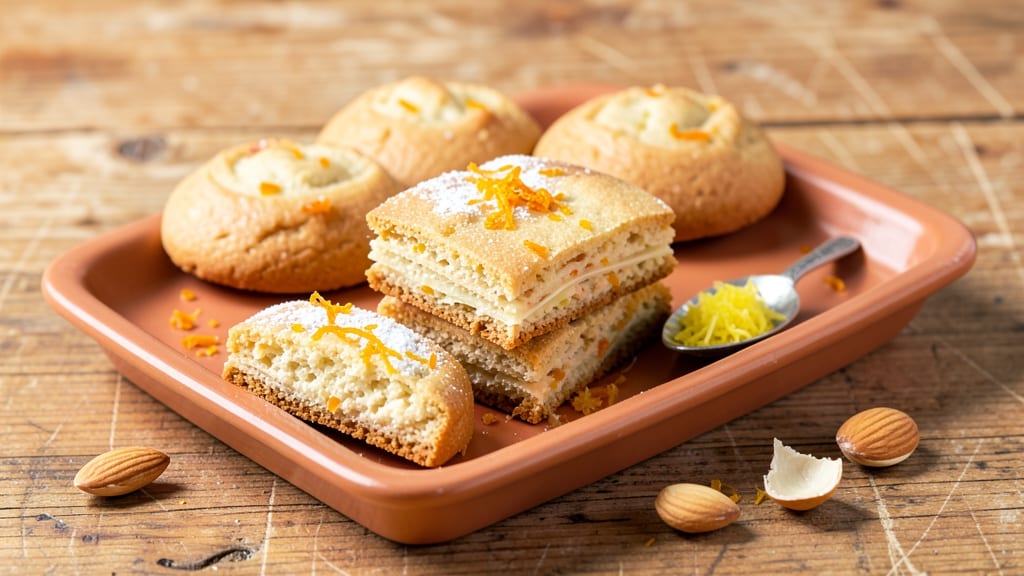
This Spanish cookie recipe delivers the delicate crunch and citrus brightness of traditional mantecadas without a single almond in sight.
The secret lies in a precise blend of lard, sugar, and egg whites that creates those signature melt-in-your-mouth layers, while lemon and orange zest infuse every bite with sun-drenched Mediterranean flavor.
I developed this version after years of testing—because authentic Spanish cookies deserve to be accessible without compromising on texture or taste.
The dough comes together in just 15 minutes using simple ingredients you likely already have: lard for that signature tender crumb, powdered sugar for sweetness without moisture, and citrus zest for that signature Spanish brightness. The key technique?
Whipping egg whites to stiff peaks before folding them into the dough—this creates the signature airy, melt-in-your-mouth texture that makes these cookies irresistible. Baking at 325°F ensures even golden edges while keeping centers perfectly soft.
What you'll end up with are delicate, crisp-edged cookies with a velvety interior that crumbles just enough to cling to your fingers. The citrus zest adds a subtle brightness that cuts through the richness, while a light dusting of powdered sugar transforms them into edible works of art.
These cookies stay fresh for days in an airtight container, making them perfect for gifting or enjoying with afternoon tea.
Serve them warm with a cup of Spanish café con leche or pair with a glass of sweet sherry for the full experience. The technique works equally well with vanilla or cinnamon variations—once you master this base, the possibilities are endless. Let's get baking!
Ingredients for spanish cookie
Just 11 ingredients for delicate Spanish cookies bursting with citrus zest and tender crumb.
| Ingredient | Amount | Notes |
|---|---|---|
| Unsalted Butter 🧈 | ½ cup | Cold, cut into small cubes |
| Lard 🍖 | ½ cup | Leaf or leaf lard preferred |
| Powdered Sugar 🍬 | 1 ½ cups | Confectioners' sugar, sifted |
| Large Egg Whites 🥚 | 4 whole | Room temperature, pasteurized |
| Lemon Zest 🍋 | 1 tbsp | Fresh, finely grated |
| Orange Zest 🍊 | 1 tbsp | Fresh, finely grated |
| Vanilla Extract 🌿 | 1 tsp | Pure vanilla, not imitation |
| All-Purpose Flour 🌾 | 2 cups | Sifted, spooned and leveled |
| Diamond Crystal Kosher Salt 🧂 | ½ tsp | Fine grain preferred |
| Ground Cinnamon 🌿 | ½ tsp | Freshly ground preferred |
| Powdered Sugar 🍬 | ¼ cup | For final dusting |
The lard and butter combo is non-negotiable for that signature melt-in-your-mouth texture. Leaf lard from Whole Foods or your local butcher gives the best flavor, but regular lard works fine in a pinch. For powdered sugar, Domino brand is my go-to because it's consistently sifted. The zest needs to be fresh—no bottled zest—so grab organic lemons and oranges if you can. I always zest two lemons and one orange to get that perfect balance of brightness. The vanilla extract should be pure Madagascar bourbon vanilla for that authentic depth (none of that imitation stuff).
No lard? Substitute with an extra 0.5 cup cold butter, but you'll lose some of that signature tenderness. Short on zest? Double the orange zest and halve the lemon for a sweeter profile. The cinnamon adds warmth—if you prefer vanilla-only, skip it entirely. For the flour, King Arthur brand is ideal because it's finely milled, but any all-purpose will work. If your powdered sugar clumps, sift it through a fine-mesh sieve before measuring. The egg whites must be room temperature to whip properly—cold whites won't reach stiff peaks.
These cookies stay fresh for 5 days in an airtight container at room temperature, but they're best enjoyed within 2 days for maximum crispness. For gifting, portion into clear cellophane bags tied with twine—looks professional and keeps them fresh longer. The dough can be chilled for up to 24 hours if you want to prep ahead. Just let it sit at room temperature for 30 minutes before baking. Store any leftovers in the fridge for up to 1 week, but they're best served warm straight from the oven.
Why You'll Love This Recipe
- No-Fuss Mixing: I swear by this dough—just cream butter and lard until fluffy, dump in powdered sugar, and fold in egg whites. No measuring cups cluttering my counter, no extra bowls to wash. The lemon zest gets folded in last, and suddenly, you’ve got a cookie that tastes like sunshine.
- Crave-Worthy Crunch: That perfect balance of tender crumb and crisp edges? The lard keeps them rich but not greasy, while the powdered sugar gives them that melt-in-your-mouth softness. Honestly, the first bite makes me forget I’m not in a Spanish café.
- Party in a Jar: These cookies stay fresh for days in an airtight container, which means I can bake a big batch and pull them out for holidays, potlucks, or just because I’m feeling fancy. Between us, they’re also the only cookie my in-laws request by name.
- Budget Magic: Butter and lard stretch further than you’d think, and powdered sugar is cheaper than buying pre-packaged cookie mixes. I’ll be real: I double the recipe when I see it on sale, and they disappear faster than I can say “second helping.”
Step-by-step instructions for Spanish cookies with citrus zest
These delicate cookies come together with precision—each step builds on the last for that signature Spanish texture and bright citrus flavor.
Whip the Butter and Lard to Light and Airy
In a stand mixer fitted with the paddle attachment, combine the 0.5 cup unsalted butter and 0.5 cup lard, both cut into small cubes. Beat on medium speed until completely smooth and creamy—this should take about 2-3 minutes. The mixture should look uniform with no visible fat pieces, and it will lighten in color slightly.
This initial step is critical because the butter and lard form the cookie's fat base, which determines both texture and tenderness. If you see any graininess at this stage, continue beating for another 30 seconds—it's better to over-whip slightly than under-whip. The fat should be room temperature but not warm to the touch, ensuring proper emulsification with the egg whites later.
Gradually Add Powdered Sugar and Zest
With the mixer running on low speed, gradually add the 1.5 cups powdered sugar in three additions, allowing each to fully incorporate before adding the next. After the sugar is fully combined, add the 1 tbsp lemon zest, 1 tbsp orange zest, and 1 tsp vanilla extract, mixing just until evenly distributed.
The citrus zest should dissolve completely into the mixture, releasing its vibrant oils that will infuse the cookies. If you notice any zest clumping, press it gently against the side of the bowl with a spatula to break it up. The mixture will become slightly thicker and more cohesive—this indicates proper emulsification. Taste a small spoonful at this point; you should detect bright citrus notes without any graininess.
Incorporate the Egg Whites and Dry Ingredients
In a separate bowl, whisk together the 4 whole large egg whites until frothy but not stiff. With the mixer on low speed, gradually add the egg whites to the butter mixture, mixing just until combined. In a separate bowl, whisk together the 2 cups all-purpose flour, 0.5 tsp diamond crystal kosher salt, and 0.5 tsp ground cinnamon. Sift the flour mixture over the wet ingredients and gently fold together using a silicone spatula until just combined.
This step requires gentle handling—overmixing develops gluten, which makes the cookies tough. The dough should be smooth, slightly sticky, and hold together when pressed. If it feels too dry, add 1 teaspoon of cold water to help bind it. The dough should be cool to the touch, which ensures the cookies hold their shape during baking rather than spreading excessively.
Chill and Shape the Dough
Divide the dough into 4 equal portions and flatten each into a 3-inch disk. Wrap each disk tightly in plastic wrap and refrigerate for at least 1 hour or up to 24 hours. Chilling is essential—it firms up the fat, which prevents the cookies from spreading too much in the oven and ensures a delicate, crisp texture.
When ready to bake, preheat your oven to 350°F and line two baking sheets with parchment paper. Roll out each chilled dough disk to about 1/8-inch thickness and cut into desired shapes using a cookie cutter or knife. Place the cut-outs 2 inches apart on the prepared baking sheets, as they will spread slightly during baking.
Bake to Golden Perfection and Dust with Sugar
Bake the cookies for 10-12 minutes, rotating the baking sheets halfway through, until the edges are light golden brown and the centers still look slightly soft. They should pull away from the parchment paper easily when gently lifted with a spatula. Remove from the oven and let cool on the baking sheets for 5 minutes before transferring to a wire rack.
While the cookies are still warm, dust the tops generously with the 0.25 cup powdered sugar using a fine-mesh sieve. This final step adds that signature Spanish cookie finish—each cookie should be lightly coated with sugar crystals. Allow the cookies to cool completely before storing in an airtight container. They'll keep well for up to 5 days at room temperature, though I promise they won't last that long!
Pro Tips For Making Spanish Cookie
- CHILL THE MIX: Mix the butter, lard, and powdered sugar until it’s just combined—no need to overwork it. I used to beat this until it looked like cookie dough, but the cookies end up dense and greasy. Stop when you can still see flecks of butter; the heat will finish the job.
- WHIP EGGS TO STIFF PEAKS: Don’t skimp on the egg whites—whip them until they hold a sharp peak when you lift the beaters. Soft peaks? Your cookies will spread like pancakes. I learned this the hard way when I rushed and ended up with sad, flat discs.
- USE COLD LARD: Take the lard out of the fridge right before mixing—cold lard creates crisp layers, while room-temperature stuff makes them soft and sticky. Yes, it’s a pain to measure cold fat, but the texture difference is worth it.
- BAKE IN BATCHES: Crowd the pan, and you’ll steam your cookies instead of baking them. Leave at least 2 inches between cookies—even if it means two trays. I know, it’s annoying, but underbaked centers and uneven edges are a dead giveaway you skipped this.
Wine and beer pairings for this recipe
Spanish Sherry Pairing
A glass of Fino sherry from Andalusia is the classic choice for these citrus-infused cookies. The crisp, nutty profile of a Tío Pepe or González Byass balances the sweetness while enhancing the lemon and orange zest notes. Serve slightly chilled for an elegant pairing that complements the delicate crunch. 🍷
Port Wine Alternative
For a richer option, try a Ruby Port like Graham's 10-Year-Old. The fruity, slightly caramelized flavors mirror the cookie's powdered sugar finish while adding depth. I recommend serving this at room temperature to highlight its velvety texture against the cookies' crisp edges.
Light White Wine
A Spanish Albariño from Rías Baixas offers bright acidity that cuts through the richness. Look for Pazo de Señorans—its citrus and stone fruit notes harmonize beautifully with the lemon and orange zest. Serve slightly chilled to refresh your palate between bites.
Beer Pairing Surprise
For a casual twist, pair with a Spanish lager like Estrella Galicia. The crisp, clean profile lets the cookie's citrus and vanilla shine without competition. The effervescence also cleanses the palate, making it perfect for enjoying these delicate treats as an afternoon snack. 🍺
Coffee Contrast
Finish your dessert experience with a Spanish cortado—equal parts espresso and steamed milk. The bold coffee balances the sweetness, while the milk's creaminess complements the cookie's tender crumb. This is my go-to pairing for a cozy, authentic Spanish treat time.
Nutrition facts
Frequently asked questions
Why does this recipe use lard instead of butter?
Traditional Spanish cookies rely on lard for their signature tender, melt-in-your-mouth texture. Lard creates a delicate crumb that butter alone can't match, while adding a subtle richness. The combination of lard and butter in this recipe delivers that authentic Spanish crunch with modern accessibility—no specialty ingredients required!
Can I make these cookies nut-free?
This recipe is already nut-free, using only powdered sugar, citrus zest, and vanilla for flavor. The almond-free version maintains the same delicate texture through proper fat incorporation (lard + butter) and egg white structure. Perfect for allergy-friendly baking!
How do I prevent the cookies from spreading too much?
Chilling the dough for at least 1 hour is key—this firms up the fat and prevents excessive spreading. Also, roll the dough to 1/8-inch thickness and bake at 350°F for 10-12 minutes. Using parchment paper and spacing cookies 2 inches apart ensures even baking without crowding.
What's the best way to store these cookies?
Keep them fresh in an airtight container for up to 5 days at room temperature. For gifting, portion into cellophane bags with twine—this preserves crispness while showcasing their elegant appearance. If storing longer, freeze for up to 1 month (thaw at room temperature before serving).
Can I substitute the citrus zest with extract?
Fresh zest is ideal for authentic flavor, but you can use 1 tsp lemon extract + 1 tsp orange extract if needed. However, zest provides both aroma and texture that extracts can't fully replicate. For best results, try to use fresh citrus—it makes a noticeable difference in brightness!