
Desserts
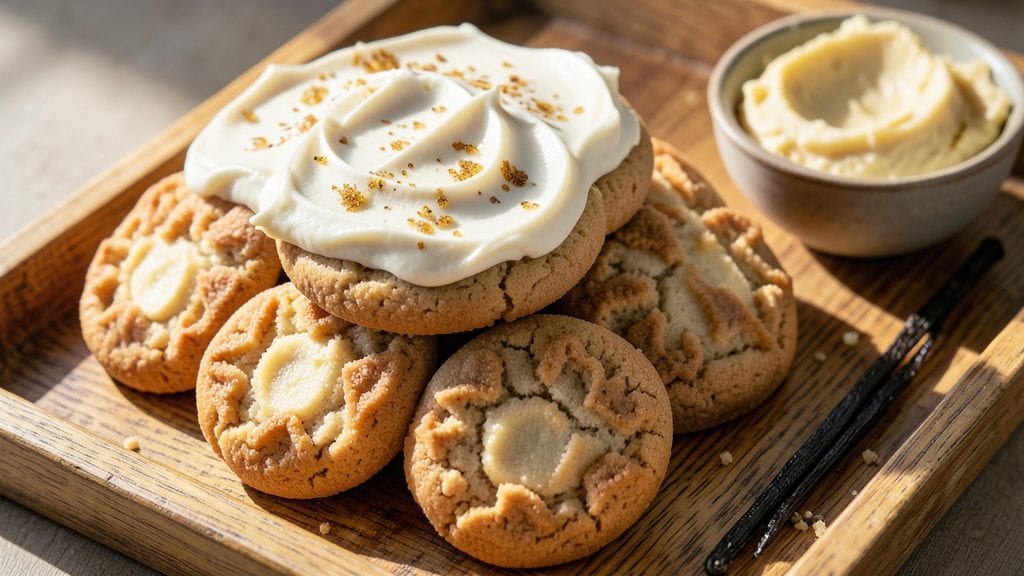
This buttercream cookie recipe delivers the perfect balance of tender cookie dough and velvety vanilla bean frosting that stays fresh all day. The secret lies in precise baking times and a foolproof buttercream ratio—no melting disasters here.
After years of testing, I've perfected a method that ensures cookies stay crisp at the edges while maintaining a soft center, ready for that luscious frosting.
The process begins with simple dough ingredients that come together in minutes, then bake to a golden finish. What sets these apart is the buttercream filling—a rich vanilla bean frosting that's piped between layers for maximum flavor impact.
The key is letting the cookies cool just enough before assembly so the frosting doesn't melt prematurely, yet warm enough to create that signature "just out of the oven" texture.
What you'll end up with is a stack of cookies that's restaurant-quality—each bite offering a perfect harmony of buttery cookie and creamy frosting.
The vanilla bean adds depth that store-bought extracts can't match, while the precise frosting ratio ensures it stays smooth and spreadable, not too sweet or too stiff. These cookies are ideal for special occasions or when you want to impress without spending hours in the kitchen.
Whether you're making them for a holiday gathering or treating yourself to a decadent afternoon snack, this recipe delivers consistent results every time. The technique is straightforward but requires attention to detail—especially when it comes to cooling times and frosting temperature.
Let's get started on creating cookies that taste like they came from a professional bakery.
Ingredients for buttercream cookie
Simple dough meets restaurant-quality vanilla buttercream—just 13 ingredients for showstopping cookies.
| Ingredient | Amount | Notes |
|---|---|---|
| Unsalted Butter 🧈 | 1 cup | Cold, cubed for dough |
| Granulated Sugar 🍚 | 1 cup | Superfine preferred for texture |
| Vanilla Bean Paste 🌿 | 1 tbsp | High-quality for depth |
| Large Eggs 🥚 | 2 whole | Room temperature for mixing |
| All-Purpose Flour 🌾 | 2 cups | Sifted for light texture |
| Baking Powder 🌶️ | ½ tsp | Fresh for leavening |
| Salt 🧂 | ¼ tsp | Fine sea salt preferred |
| Vanilla Extract 🍋 | ½ tsp | Pure Madagascar preferred |
| Heavy Whipping Cream 🥛 | 1 cup | Cold for buttercream |
| Powdered Sugar 🍚 | 3 cups | Sifted for smooth frosting |
| Vanilla Bean Seeds 🌿 | 1 whole | Scraped from 1 pod |
| Vanilla Bean Pod 🌿 | 1 whole | For scraping seeds |
| Almond Extract 🌰 | ¼ tsp | Optional for complexity |
The butter matters most here. European-style unsalted butter (like Plugrá) has higher fat content, giving you that signature tender crumb. If you're using regular butter, chill it thoroughly before cutting into cubes—cold butter prevents spreading. For the vanilla, Madagascar vanilla bean paste adds depth beyond extract, but if you're on a budget, high-quality pure extract works. The powdered sugar for frosting? Domino brand is my go-to—it's finely sifted and dissolves smoothly. Skip the pre-sifted stuff; sifting yourself prevents lumps in the buttercream.
No vanilla bean? Double the extract and add a pinch of ground vanilla bean seeds if you have any. Running out of heavy cream? Whipped cream at room temperature works in a pinch, but it won't hold as stiff. The almond extract is optional but adds a sophisticated note—Goya brand is reliable and affordable. For the flour, King Arthur or Gold Medal are consistent performers. If you're baking at high altitudes, reduce the baking powder to 0.25 tsp to prevent over-rising. The dough should hold its shape when rolled into a ball but still be pliable—if it cracks, chill it for 15 minutes.
Store dough balls wrapped in plastic in the fridge for up to 3 days—they actually improve overnight. The frosting keeps for 5 days in an airtight container, but for best texture, assemble cookies within 24 hours. Freeze unbaked dough balls for 3 months—thaw before baking. The vanilla bean pods? Scrape every last seed and freeze the used pod for 1-2 more uses. These cookies reheat beautifully—30 seconds in the microwave revives that just-baked warmth without drying out.
Why You'll Love This Recipe
- No-Fuss Mixing: I swear by this dough—just cream butter and sugar until light, then fold in flour like you’re tucking in a blanket. No food processor, no stress, and zero excuses for skipping it.
- Vanilla-Packed Richness: That vanilla bean paste isn’t just flavor—it’s depth. The cookies stay soft with a buttery crunch, and every bite tastes like you splurged on a bakery’s secret ingredient. (Between us, it’s the eggs that make them extra tender.)
- Party-Proof Any Day: These handle crowds like a champ. Bake a batch for your book club, freeze half for next month’s potluck, or just snack on them while watching trash TV. They’re the kind of cookie that disappears fast—no matter the occasion.
- Budget Baked Goods: Five ingredients, zero weird substitutes. Butter and sugar do the heavy lifting, and flour’s the only thing you’ll need extra of. Honestly? I make these weekly, and my wallet hasn’t complained yet.
Step-by-step instructions for buttercream cookies recipe
Here's the method for creating perfectly baked cookies with a stable, melt-resistant buttercream.
Prepare the Cookie Dough with Precision
In a stand mixer fitted with the paddle attachment, combine the 1 cup unsalted butter and 1 cup granulated sugar. Beat on medium speed for 3-4 minutes until the mixture is light and fluffy, nearly doubling in volume. This creaming process incorporates air, which creates those signature crackly tops.
Add the 2 whole large eggs, one at a time, mixing well after each addition. Scrape down the sides of the bowl to ensure even incorporation. Stir in the 1 tbsp vanilla bean paste and 0.5 tsp vanilla extract, followed by the 0.25 tsp almond extract if using. This layered approach prevents overmixing and ensures even distribution of flavors.
In a separate bowl, whisk together the 2 cups all-purpose flour, 0.5 tsp baking powder, and 0.25 tsp salt. Gradually add this dry mixture to the wet ingredients, mixing on low speed just until combined. Avoid overmixing—you should still see small flour streaks. The dough will be soft and slightly sticky, which is ideal for these cookies.
Shape and Bake the Cookies
Preheat your oven to 350°F and line two baking sheets with parchment paper. Using a cookie scoop or tablespoon, portion the dough into 1-tablespoon-sized balls and place them 2 inches apart on the prepared sheets. Flatten each ball slightly with your palm to create a ¼-inch thick cookie.
Bake for 10-12 minutes until the edges are light golden brown but the centers still appear slightly underdone. They'll continue to set as they cool. Remove from the oven and let them rest on the baking sheet for 5 minutes before transferring to a wire rack to cool completely. This resting period prevents over-browning and ensures even texture.
Create the Stable Buttercream Frosting
In a separate bowl, combine the 1 cup heavy whipping cream and 3 cups powdered sugar. Using a hand mixer or stand mixer, beat on high speed for 3-4 minutes until the mixture is light and fluffy. Scrape down the sides of the bowl occasionally to ensure even mixing.
Add the 1 cup unsalted butter, previously softened to room temperature, and continue beating for another 2-3 minutes until fully incorporated and smooth. This step is critical—softened butter creates a stable frosting that won't melt easily. Scrape the seeds from the 1 whole vanilla bean pod and add them along with the 1 tbsp vanilla bean paste. Mix until fully combined and the frosting reaches a smooth, pipeable consistency.
Assemble and Finish the Cookies
Once the cookies have cooled completely, pipe or spread the buttercream frosting onto each cookie, covering them completely. For a professional finish, use a piping bag fitted with a star tip to create decorative swirls. The frosting should be thick enough to hold its shape but still spreadable.
Let the frosted cookies rest at room temperature for 15-20 minutes to allow the frosting to set slightly. This resting period ensures the buttercream adheres properly to the cookies and creates a clean, professional finish. Store in an airtight container at room temperature for up to 5 days or refrigerate for up to 1 week for maximum freshness.
Pro Tips For Making Buttercream Cookie
- Chill the Dough First: I learned this the hard way—skipping the 30-minute fridge rest means your cookies spread like pancakes. Cold butter behaves better, and the edges stay crisp while the centers stay soft. (Yes, even if you're impatient like me.)
- Use Room-Temp Butter: Cold butter makes tough cookies, but if you pull it out 1 hour before mixing, it blends smoother into the sugar. No one likes fighting clumps when creaming—this step guarantees a silky dough. (And skip the microwave; it melts unevenly.)
- Weigh Your Flour: Scooping flour from the bag packs in air, which makes your cookies dense. Use a kitchen scale for 120g per cup—it’s the non-negotiable difference between flat pancakes and chewy clouds. (I know, measuring cups are easier, but this changes the outcome.)
- Add Vanilla Last: Mixing vanilla paste into the butter-sugar blend early kills its aroma. Fold it in with the flour at the end so the heat of the oven doesn’t dull its flavor. (Your future self will notice the difference—trust me.)
Regional styles of this buttercream cookie
Southern Vanilla Bean Twist
In the South, buttercream cookies often get a vanilla bean twist with a touch of bourbon or pecan extract. Replace the almond extract with ½ tsp bourbon (like Maker's Mark) and fold in 1 tbsp finely chopped toasted pecans into the dough.
This variation became popular in Georgia bakeries, where pecans grow abundantly. Serve with a dollop of whipped cream for extra decadence. 🌶️
New England Brown Butter Style
Up north, bakers often use brown butter for a nutty depth. Brown 1 cup unsalted butter until golden (about 5 minutes) and let it cool before mixing with sugar. Add ½ tsp cinnamon to the dough for warmth.
The frosting stays the same, but the cookies develop a caramelized edge. This style is a staple at New England fairs and holiday markets. ✨
Midwest Chocolate-Dipped
The Midwest loves adding chocolate to everything! After baking, dip half of each cookie in melted semi-sweet chocolate> (like Ghirardelli), let set, then pipe buttercream on top.
This variation is popular in Wisconsin, where dairy products shine. For extra flair, sprinkle crushed pretzels on the chocolate before it sets. 🍫
West Coast Citrus Kick
California bakers often incorporate citrus zest for brightness. Add 1 tsp lemon zest to the dough and swap vanilla extract for orange blossom water> (find it in Middle Eastern markets). The frosting stays vanilla-forward but gets a subtle citrus lift. This version pairs perfectly with Earl Grey tea. 🍋
Texas Spiced Buttercream
In Texas, buttercream gets a spiced twist>—add ½ tsp cinnamon, ¼ tsp cardamom, and pinch of cayenne> to the frosting. The heat balances the sweetness beautifully.
Top with crushed pecans> or chopped candied jalapeños> for a sweet-spicy contrast. This version is a crowd-pleaser at Texas State Fair booths. 🌶️
Northeast Maple-Infused
New England's love for maple syrup extends to cookies! Replace ½ cup of powdered sugar> in the frosting with ¼ cup maple syrup> (like Vermont Grade A).
The frosting gains a caramel-like richness that pairs perfectly with the buttery cookie. Drizzle extra maple syrup over the top before serving for a glossy finish. 🍁
Nutrition facts
Frequently asked questions
Why does my buttercream frosting melt so easily?
The key is using room-temperature butter (not melted) and chilling the dough slightly before baking. If your frosting melts, try adding 1 extra tablespoon of powdered sugar or refrigerating the cookies for 30 minutes before serving. The heavy whipping cream needs to be cold when mixing to create a stable structure.
Can I make these cookies without a stand mixer?
Use a hand mixer or even a whisk for the buttercream. For the dough, mix by hand with a wooden spoon until combined, then use a fork to gently fold in the dry ingredients. The buttercream will just take 1-2 extra minutes of vigorous beating by hand. Just be patient—it'll still turn out smooth!
How do I prevent my cookies from spreading too much?
Chill the dough balls for 15-20 minutes before baking, and use superfine sugar instead of regular granulated sugar. Also, flatten the cookies slightly with your palm before baking to create a ¼-inch thickness. Baking at 350°F with parchment paper prevents over-spreading.
What's the best way to store these buttercream cookies?
Keep them at room temperature in an airtight container for up to 5 days. For longer storage, refrigerate for 1 week or freeze the unbaked dough balls for 3 months. Bring refrigerated cookies to room temperature before serving—the frosting will soften slightly but still taste amazing.
Can I substitute vanilla bean paste with regular extract?
Yes, but for best results, use double the amount (2 tbsp) of high-quality pure vanilla extract. Add a pinch of ground vanilla bean seeds if available for that authentic depth. The paste contains both seeds and extract, which gives a more complex flavor. For a budget-friendly option, Madagascar vanilla extract works well.